.svg)

Some outfits look expensive because they are expensive.
Helpful? Barely.
Other outfits look expensive because they’re styled with intention: the proportions are balanced, the shoes are clean, the clothes fit well, and nothing is fighting for attention like it’s auditioning for a very dramatic group project.
That is much more useful.
You do not need a designer wardrobe to look polished. You do not need to replace everything you own. And you definitely do not need to panic-buy a “quiet luxury” blazer because the internet told you beige was a personality.
The truth is, most people already own clothes that can look more elevated. The difference is usually in how the outfit is put together.
This guide will show you how to make your outfits look more expensive without buying anything new, using small styling changes that create more polish, more intention, and less “I got dressed while arguing with a laundry pile.”
Quick Answer: How Do You Make an Outfit Look More Expensive?
To make an outfit look more expensive without buying new clothes, focus on fit, fabric care, color coordination, proportion, grooming, clean shoes, simple accessories, and outfit editing. Small details like steaming clothes, tucking a shirt, polishing shoes, wearing tonal colors, and removing one distracting element can make a simple outfit look much more elevated.
The goal is not to look rich. The goal is to look intentional.
And the good news? Intentional is free.
1. Steam or Iron Your Clothes
We are starting with the boring one because it works.
Wrinkles can make even beautiful clothes look tired. A cotton shirt, linen trousers, silk blouse, blazer, or simple dress instantly looks more polished when it’s steamed, pressed, or at least not doing its best crumpled napkin impression.
You do not need every garment to look factory-flat. Linen, for example, is allowed to have some texture because linen has chosen a dramatic life. But there is a difference between relaxed fabric and “this was pulled from the bottom of a suitcase after a long personal journey.”
How to do it
Before wearing an outfit, check the pieces that matter most:
- Shirt collar
- Button placket
- Cuffs
- Trouser crease or hem
- Skirt front
- Dress bodice
- Blazer lapels
- Any fabric that bunches around the waist or hips
If you hate ironing, use a steamer. If you hate steaming, hang clothes in the bathroom while you shower. It will not solve everything, but it may help enough to avoid full wrinkle chaos.
Why it makes outfits look expensive
Smooth clothes look cared for. Cared-for clothes look more polished. And polished clothes make even simple outfits look more considered.
Try this with clothes you already own
Take one outfit you usually wear casually - jeans and a button-down, trousers and a tee, a midi skirt and blouse - and steam only the top. Then put it on with clean shoes. The difference will annoy you because it is so simple.
2. Clean Your Shoes
Shoes are one of the fastest ways to make an outfit look either elevated or neglected.
A great outfit with scuffed, dusty, tired shoes loses impact quickly. Clean shoes make the whole look feel more intentional, even when the outfit itself is simple.
This applies to:
- Sneakers
- Loafers
- Boots
- Ballet flats
- Sandals
- Heels
- Dress shoes
- Mules
We are not looking for perfection. Real life involves sidewalks. But if your shoes are visibly dirty, misshapen, stained, or holding onto the emotional residue of last winter, they are dragging the outfit down.
How to do it
Give your shoes a quick reset:
- Wipe leather shoes with a soft cloth.
- Clean sneaker soles with a damp cloth or gentle brush.
- Remove lint, dust, or pet hair from suede with the right brush.
- Trim loose threads.
- Replace worn laces.
- Check whether sandals need a wipe-down.
- Store shoes so they keep their shape.
For leather shoes, a little polish or conditioner can make a major difference. For white sneakers, cleaning the sole often does more than you’d expect.
Why it makes outfits look expensive
Clean shoes signal care. They also finish the outfit. Even a plain white tee and jeans can look more expensive with fresh-looking shoes and a good bag.
Try this with clothes you already own
Choose one pair of shoes you wear often and clean them properly. Then wear them with your most basic outfit. You may discover your outfit did not need new clothes. It needed shoes that stopped whispering, “I have seen things.”
3. Create a Clear Color Story
One of the easiest ways to make an outfit look more expensive is to simplify the color palette.
Expensive-looking outfits often have a strong color story. That does not mean everything has to be beige, black, or white. It means the colors look like they were chosen on purpose.
A color story can be:
- Monochrome
- Tonal
- Neutral with one accent color
- Two neutrals and one print
- A repeated color in the outfit
- A limited palette of two or three colors
When too many unrelated colors compete, the outfit can feel busy. When the colors relate to each other, the same clothes look more styled.
Easy color formulas
Try one of these:
Formula 1: Monochrome
Wear one color head-to-toe, using slightly different shades or textures.
Examples:
- All black
- All cream
- Navy and soft blue
- Chocolate and tan
- White and ivory
Formula 2: Tonal dressing
Wear colors from the same family.
Examples:
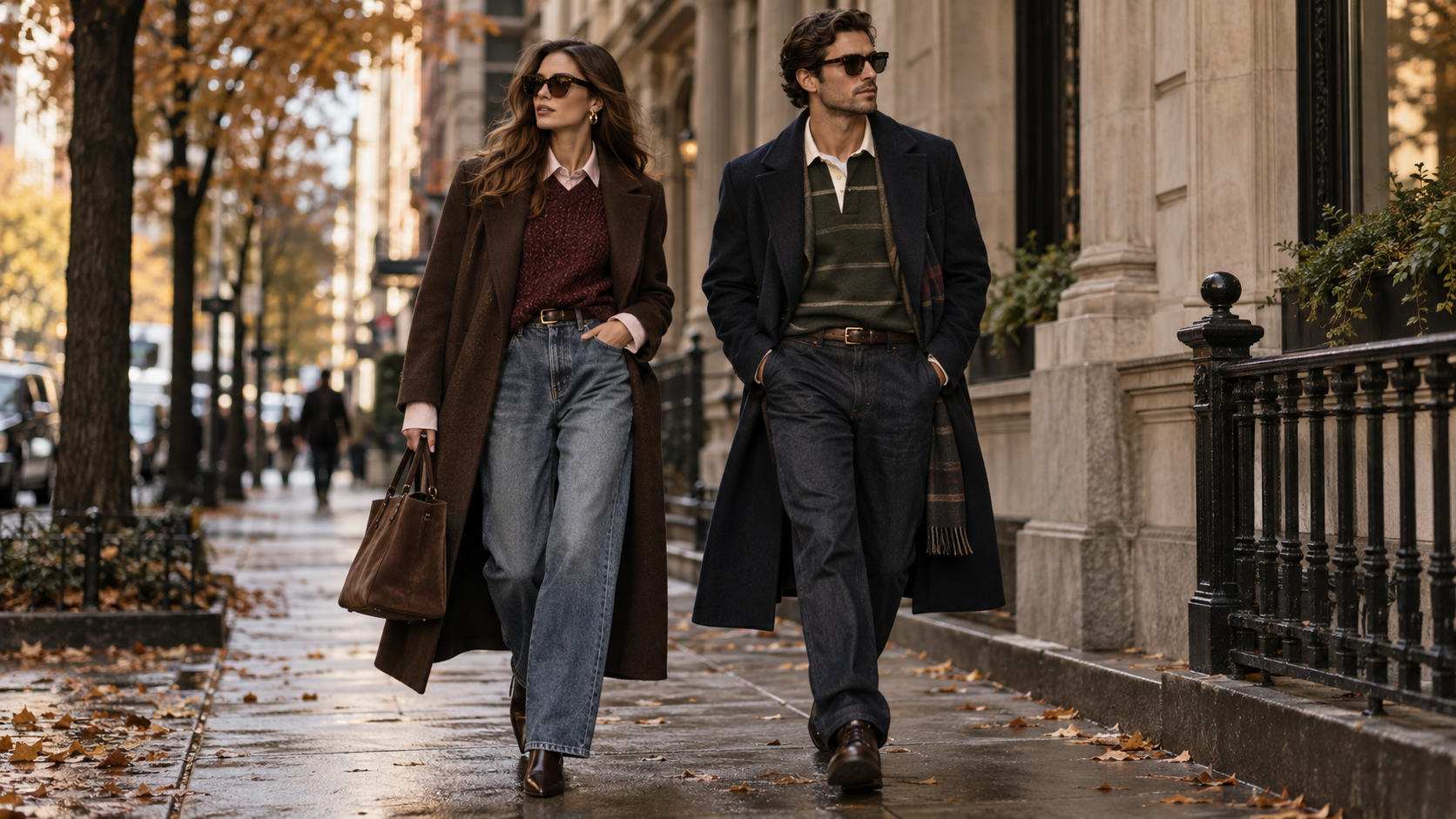
- Camel + beige + cream
- Olive + sage + khaki
- Navy + denim + pale blue
- Burgundy + rose + soft pink
Formula 3: Neutral base + one accent
Keep the main outfit neutral and add one clear color.
Examples:
- White shirt + black trousers + red flats
- Navy dress + tan sandals + coral bag
- Jeans + cream sweater + green scarf
Formula 4: Repeat one color
Repeat a color in two places so the outfit feels connected.
Examples:
- Black belt + black shoes
- Brown bag + brown sandals
- Blue shirt + blue stripe in scarf
- Gold jewelry + gold buckle
Why it makes outfits look expensive
A clear palette makes an outfit feel edited. Edited outfits usually look more elevated because the eye knows where to go.
Try this with clothes you already own
Pull out three pieces in the same color family and make an outfit. Don’t worry about matching perfectly. Slight variation often looks better than exact matching because it adds depth.
4. Pay Attention to Fit — Especially the “Almost Right” Pieces
Fit is one of the biggest differences between outfits that look expensive and outfits that look a little off.
And no, this is not about your body being wrong. Your body is not the problem. Clothes are mass-produced guesses with buttons.
The issue is often that a piece is almost right:
- The sleeve is too long.
- The trousers pool awkwardly.
- The waistband gaps.
- The blazer pulls.
- The shirt is too tight at the bust or chest.
- The dress fits in one place but not another.
- The shoulder seam sits too low or too high.
- The hem hits at an awkward spot.
These little fit issues add up. They make outfits look less intentional, even when the individual pieces are good.
What to check
When you put on an outfit, look at:
- Shoulder seams
- Sleeve length
- Waist fit
- Trouser length
- Rise
- Bust or chest pulling
- Button gaps
- Hem length
- Fabric pulling across hips or thighs
- How the outfit looks when sitting
A piece does not need to fit like couture. It just needs to look like it belongs on your body today.
Quick fixes without buying anything
Try:
- Rolling sleeves neatly
- Cuffing jeans or trousers
- Tucking or half-tucking a shirt
- Adding a belt
- Wearing a better bra or underlayer
- Using fashion tape
- Trying different shoes to improve hem length
- Layering a structured piece over a clingy one
- Moving a piece to your alterations pile
Why it makes outfits look expensive
Good fit creates ease. When clothes sit well, the outfit looks calmer, cleaner, and more polished.
Try this with clothes you already own
Choose one outfit that feels “fine but not great.” Try adjusting only the fit: roll the sleeves, tuck the shirt, change the shoes, add a belt, or cuff the pants. Take before-and-after photos. The improvement may be rude in its obviousness.
5. Balance Your Proportions
Outfits often look more expensive when the proportions are clear.
That means the relationship between your top, bottom, shoes, and layers feels balanced. The outfit has a shape. It knows what it is doing. It is not wandering around looking for supervision.
Common proportion issues include:
- Oversized top + oversized bottom with no structure
- Long top + cropped wide pants that shorten the leg line
- Tight top + tight bottom with no visual breathing room
- Long cardigan + long dress + heavy shoes
- Cropped jacket hitting at the widest point of the outfit
- Shoes that visually fight with the hemline
Again, this is not about rules. It’s about creating a look that feels intentional.
Easy proportion formulas
Try these:
Wide bottom + defined top
Wide-leg trousers, full skirt, or relaxed jeans usually work well with a tucked, fitted, cropped, or structured top.
Slim bottom + relaxed top
Slim trousers, leggings, straight jeans, or pencil skirts can balance beautifully with a looser shirt, sweater, blazer, or jacket.
Long layer + simple base
A long coat, cardigan, or duster works best when the base outfit underneath is clean and streamlined.
Short jacket + higher waist
Cropped or waist-length jackets often work well with high-rise trousers, jeans, or skirts.
Volume in one place
If the top has drama, keep the bottom simpler. If the bottom has volume, keep the top cleaner.
Why it makes outfits look expensive
Balanced proportions make outfits look styled instead of accidental. They also help your clothes show their shape, fabric, and structure more clearly.
Try this with clothes you already own
Take one oversized piece you love. Pair it with something more structured or defined. Then take one fitted piece and pair it with something relaxed. See which combination feels better.
6. Use Accessories With Restraint
Accessories can make an outfit look expensive — or make it look like everyone in your jewelry box had a meeting and refused to compromise.
The trick is not to wear no accessories. The trick is to make them feel intentional.
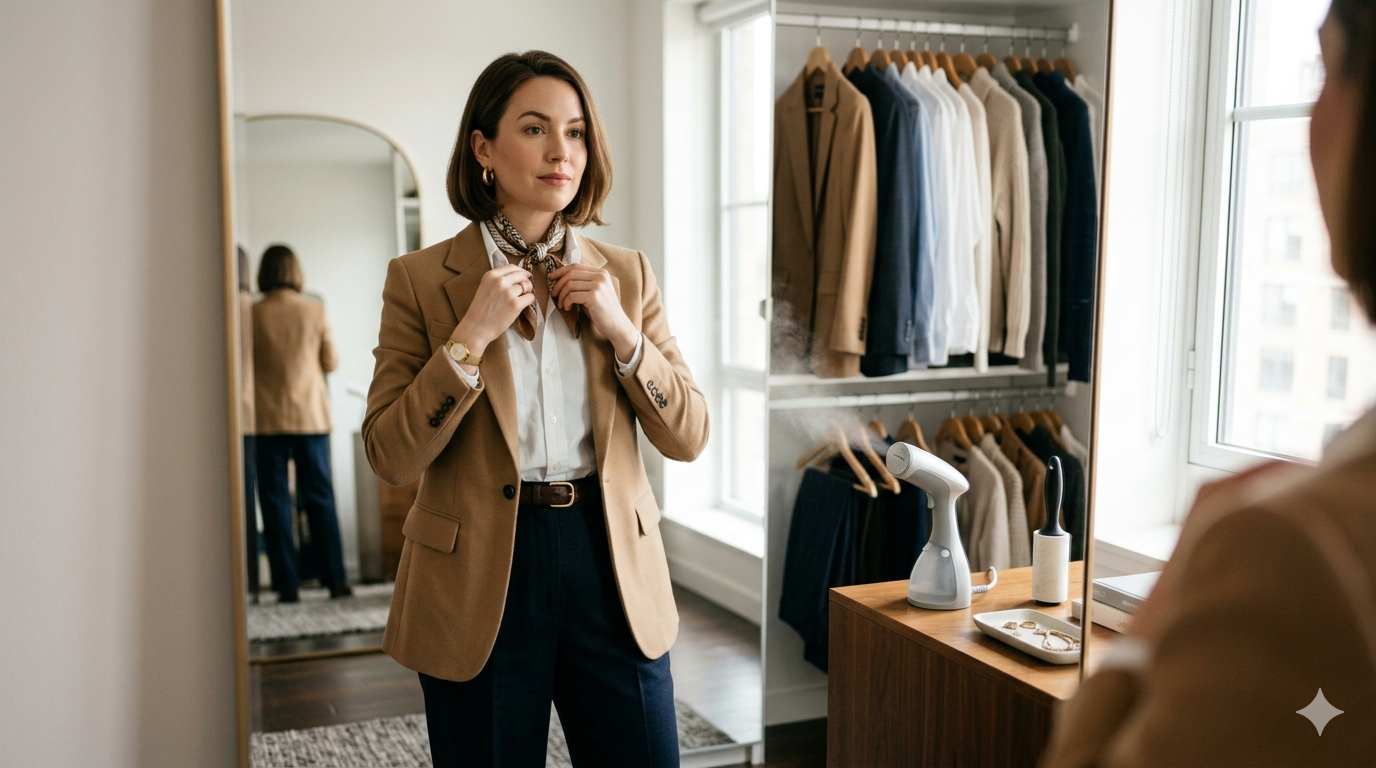
A simple outfit can look much more polished with:
- A belt
- Small hoops
- A watch
- A scarf
- Sunglasses
- A structured bag
- A clean hair clip
- One necklace
- A neat stack of rings
- A simple bracelet
You do not need all of these at once. In fact, please don’t make your accessories carpool unless they get along.
The one-focus rule
Choose one accessory focus:
- Statement earrings
- Bold belt
- Colorful scarf
- Great bag
- Strong sunglasses
- Red shoe
- Interesting necklace
Then keep everything else quieter.
Match metals or repeat details
Matching metals is not mandatory, but it can make an outfit feel more cohesive. If you’re wearing gold earrings, a gold watch, and a gold belt buckle, the outfit looks connected. The same is true for silver, black hardware, tortoiseshell, woven textures, or leather tones.
Why it makes outfits look expensive
Accessories create finish. They show that the outfit was considered from head to toe.
Try this with clothes you already own
Put on a very simple outfit. Add one accessory. Then add another. Then remove one. Usually, the strongest version is not the one with the most pieces — it’s the one with the clearest point of view.
7. Mix Textures to Add Depth
An outfit can be simple and still look expensive if the textures are interesting.
Texture gives depth to neutral outfits, monochrome outfits, and basic pieces. It is the reason a white shirt and black trousers can look completely different depending on whether the shirt is crisp cotton, soft silk, ribbed knit, linen, or poplin.
Try mixing:
- Cotton + leather
- Linen + gold jewelry
- Denim + silk
- Wool + satin
- Knitwear + crisp shirting
- Suede + cotton
- Ribbed knit + tailored trousers
- Matte fabrics + subtle shine
- Smooth fabrics + woven accessories
The goal is contrast. If everything is flat, thin, and similar, the outfit can look less dimensional. If the textures vary, even a simple palette looks richer.
Easy texture combinations
Try:
- White cotton shirt + denim + leather belt
- Black knit top + satin skirt
- Linen trousers + ribbed tank
- Silk blouse + wool trousers
- Denim jacket + cotton dress
- Knit dress + leather sandals
- Crisp blazer + soft tee
Why it makes outfits look expensive
Texture creates visual interest without needing loud colors or trendy pieces. It makes the outfit feel layered and thoughtful.
Try this with clothes you already own
Build an outfit using only two colors, then add texture. For example: black trousers, black knit top, leather belt, silver jewelry. Same color family, more depth.
8. Edit One Thing Before You Leave
The final step is editing.
Not in a harsh way. Not in a “your outfit is wrong” way. More like: let’s give the outfit a quick little manager before it goes into public.
Before you leave, look at your outfit and ask:
- Is anything distracting?
- Is anything wrinkled?
- Is anything pulling?
- Do the shoes work?
- Does the bag match the level of the outfit?
- Are there too many competing details?
- Does one piece look too casual for the rest?
- Would removing one thing make this better?
Sometimes making an outfit look more expensive is about taking something away.
Maybe you remove the extra necklace. Maybe you swap the tote for a cleaner bag. Maybe you take off the cardigan that makes the outfit look bulky. Maybe you change from worn sneakers to loafers. Maybe you tuck the shirt instead of leaving it loose.
This is the difference between dressed and styled.
The mirror-photo trick
Take a quick photo of your outfit. You do not have to post it. This is not content. This is field research.
Photos help you see:
- Proportions
- Color balance
- Hem length
- Shoe choice
- Whether the outfit has a focal point
- Whether something feels off
The camera can be annoying, but it is often honest.
Why it makes outfits look expensive
Editing removes visual noise. Expensive-looking outfits usually have clarity. Every piece has a reason to be there.
Try this with clothes you already own
Get dressed normally, then remove or change one thing. Try swapping shoes, simplifying jewelry, changing the bag, adding a belt, or removing a layer. See which version feels cleaner.
Outfit Formulas That Look Expensive Without Buying Anything New
Here are simple outfit formulas you can build from pieces many people already own.
Formula 1: White Shirt + Trousers + Clean Shoes
Wear:
- White button-down shirt
- Tailored trousers
- Belt
- Loafers, flats, sandals, or clean sneakers
- Simple jewelry
Why it works: crisp, simple, and polished.
Make it better: roll the sleeves, tuck the shirt, and steam the collar.
Formula 2: Monochrome Base + One Strong Accessory
Wear:
- Top and bottom in the same color family
- One standout accessory
- Simple shoes
Examples:
- Black tee + black trousers + gold earrings
- Cream sweater + ivory jeans + tan belt
- Navy top + dark denim + silk scarf
Why it works: the color story does most of the work.
Make it better: vary textures so the outfit doesn’t look flat.
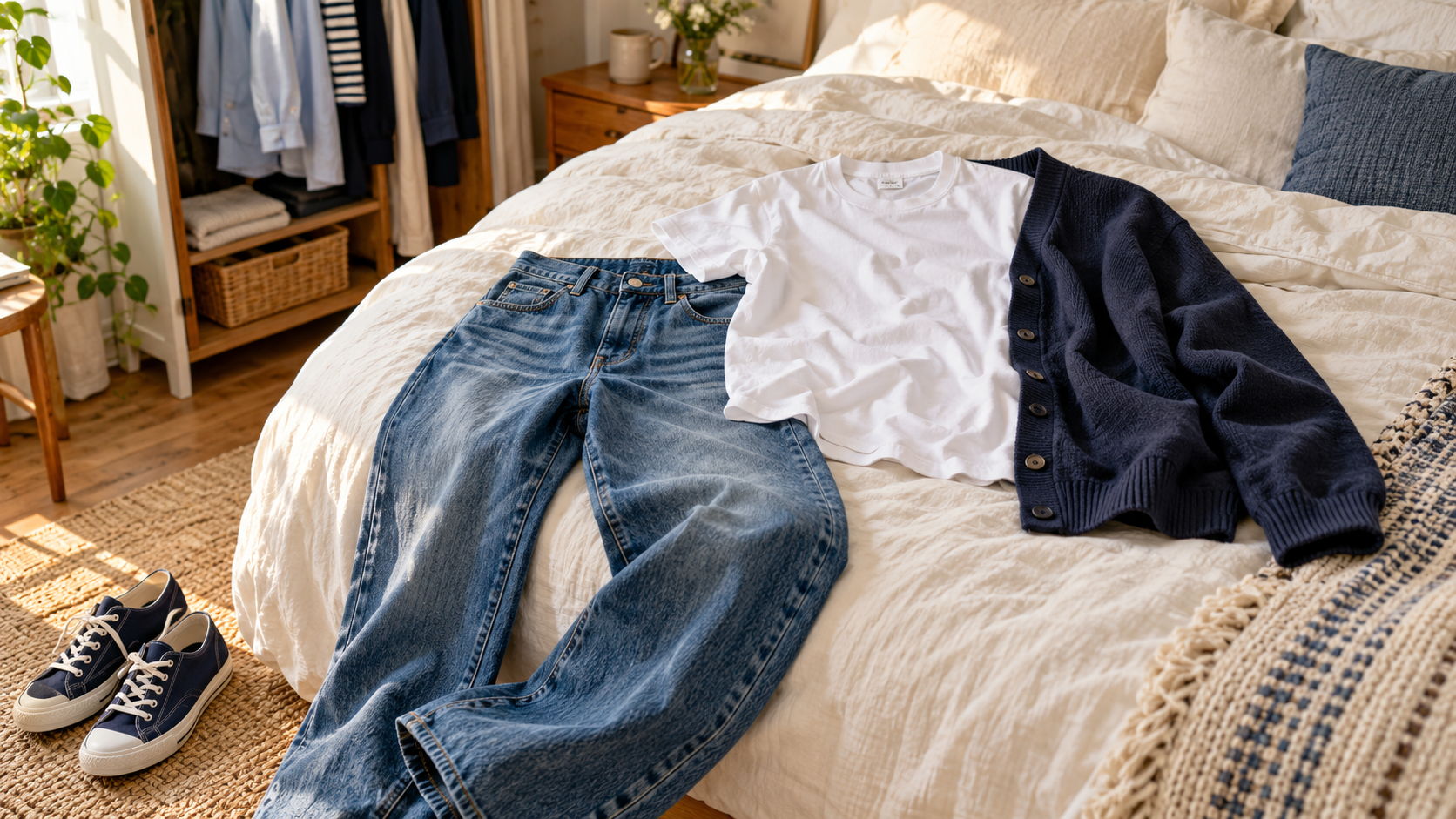
Formula 3: Jeans + Blazer + Polished Shoe
Wear:
- Well-fitting jeans
- Tee, tank, blouse, or button-down
- Blazer
- Loafers, ballet flats, boots, or sandals
Why it works: the blazer adds structure, and the polished shoe keeps the jeans from feeling too casual.
Make it better: choose jeans with a clean hem and no excessive distressing.
Formula 4: Simple Dress + Intentional Accessories
Wear:
- Plain dress
- Belt, jewelry, scarf, or structured bag
- Clean sandals, flats, or boots
Why it works: a simple dress becomes an outfit with the right finishing details.
Make it better: choose one focal point, not five.
Formula 5: Knit Top + Skirt + Clean Lines
Wear:
- Ribbed knit, tee, or fine sweater
- Midi skirt or tailored skirt
- Belt if needed
- Flats, sandals, loafers, or boots
Why it works: the mix of soft top and structured bottom feels elevated.
Make it better: tuck the top or choose one that hits at the right place.
Formula 6: Tonal Neutrals + Texture
Wear:
- Cream, beige, camel, taupe, gray, navy, black, olive, or brown pieces
- At least two different textures
- Minimal accessories
Why it works: tonal dressing looks calm and expensive without shouting.
Make it better: make sure the fabrics look intentional together, not accidentally mismatched.
What Makes an Outfit Look Cheap?
Let’s be careful with the word “cheap,” because the goal is not to shame affordable clothes. Plenty of affordable pieces look fantastic. Plenty of expensive clothes look confused and overpriced. We’ve all seen a designer item that looked like it lost a bet.
When people say an outfit looks cheap, they usually mean it looks less polished, less cared for, or less intentional.
Common reasons include:
- Wrinkled fabric
- Poor fit
- Scuffed shoes
- Too many competing details
- Thin fabric that clings awkwardly
- Visible wear and tear
- Pilling
- Loose threads
- Bad proportions
- Overly busy color combinations
- Accessories that don’t match the outfit’s level of polish
- Clothes that need a repair
Most of these are fixable.
The point is not to own expensive clothes. The point is to maintain and style what you own so it looks its best.
How to Make Casual Outfits Look More Expensive
Casual outfits can absolutely look expensive. They just need a little structure and care.
Try these upgrades:
- Swap an old tee for your best-fitting tee.
- Add a belt to jeans.
- Clean your sneakers.
- Wear a structured bag instead of a slouchy everyday tote.
- Add sunglasses.
- Steam the shirt.
- Choose tonal colors.
- Roll sleeves neatly.
- Cuff jeans intentionally.
- Add small earrings or a watch.
- Choose a jacket with shape.
Example:
Instead of: wrinkled tee + jeans + tired sneakers
Try: smooth tee + straight jeans + belt + clean sneakers + sunglasses
Still casual. Much better.
How to Make Work Outfits Look More Expensive
Work outfits often look more polished when they have clean lines, good fit, and restrained accessories.
Try:
- Tucking your blouse or shirt
- Wearing a belt with trousers
- Keeping shoes polished
- Choosing one refined accessory
- Using a blazer or structured cardigan
- Sticking to a simple color palette
- Avoiding too many loud patterns at once
- Making sure trousers are the right length
- Keeping knits free from pilling
Example:
Instead of: blouse untucked over trousers + worn flats
Try: blouse tucked + belt + trousers + polished flats + small earrings
Same wardrobe. Stronger outfit.
How to Make Summer Outfits Look More Expensive
Summer is tricky because heat makes everyone want to give up and become a damp napkin. Fair.
But warm-weather outfits can still look polished.
Try:
- Linen or cotton pieces that are intentionally relaxed
- A color palette of two or three shades
- Clean sandals
- A woven bag
- Simple jewelry
- Pressed shorts or trousers
- A crisp button-down worn open over a tank
- A belt with shorts or linen pants
- Sunglasses
- A dress that fits well through the shoulder and bust
Example:
Instead of: random tank + wrinkled shorts + flip-flops
Try: ribbed tank + tailored shorts + belt + leather sandals + sunglasses
Still easy. Less “laundry day at a beach rental.”
How to Make Outfits Look Expensive in Photos
If your outfit needs to look good in photos, a few extra details help.
Before taking photos:
- Steam visible wrinkles.
- Check the neckline.
- Smooth pockets.
- Fix twisted seams.
- Remove hair ties from wrists.
- Clean shoes.
- Choose a clear focal point.
- Check that your bag is not overstuffed.
- Make sure your clothes sit well when standing and sitting.
- Take one test photo in natural light.
Photos exaggerate clutter. They also reveal fit issues you may not notice in the mirror. Annoying, yes. Useful, also yes.
How OpenWardrobe Helps You Make Better Outfits From What You Own
Making outfits look more expensive starts with seeing what you already have.
With OpenWardrobe, you can digitize your wardrobe, create outfits, track what you actually wear, and notice which pieces are doing the most work. Instead of buying another “elevated basic” and hoping it fixes everything, you can style what you own more intentionally.
Use OpenWardrobe to:
- Build outfit formulas
- Save polished outfit combinations
- Track your most-worn pieces
- Identify pieces that need tailoring, cleaning, or repair
- See where your wardrobe has real gaps
- Avoid buying duplicates
- Make more outfits from fewer clothes
The best wardrobe is not the biggest one. It is the one that works for your real life.
Preferably without requiring a financial summit every time you get dressed.
FAQ: How to Make Outfits Look More Expensive
How can I make my outfit look expensive without spending money?
You can make your outfit look expensive without spending money by steaming or ironing your clothes, cleaning your shoes, improving the fit, choosing a simple color palette, balancing proportions, using accessories intentionally, mixing textures, and editing one distracting detail before you leave.
What colors make outfits look expensive?
Neutral and tonal color palettes often make outfits look more expensive because they feel cohesive. Black, white, cream, navy, camel, gray, olive, chocolate, beige, and soft tonal combinations can all look elevated. Bright colors can also look expensive when they are styled intentionally and not competing with too many other colors.
Do outfits have to be neutral to look expensive?
No. Neutral outfits often look polished because they are easy to coordinate, but color can look expensive too. The key is choosing a clear color story. For example, a red sweater with dark denim and black boots can look very polished. A green dress with gold jewelry and tan sandals can look elevated. The color matters less than the styling.
What makes clothes look more expensive?
Clothes tend to look more expensive when they fit well, are clean and wrinkle-free, have good structure, and are styled with intention. Fabric care, tailoring, proportion, color coordination, and accessories all make a big difference.
How do I make jeans look more expensive?
To make jeans look more expensive, choose a clean pair with a good fit, avoid excessive distressing, add a belt, pair them with a polished top or blazer, and wear clean shoes. A tucked shirt, structured jacket, loafers, boots, or sleek flats can instantly elevate jeans.
How do I make a simple outfit look polished?
To make a simple outfit look polished, focus on details: steam the clothes, clean the shoes, tuck or adjust the top, add one intentional accessory, and make sure the colors work together. A simple outfit often looks best when it is clean, fitted, and edited.
What accessories make outfits look expensive?
Simple, intentional accessories often make outfits look more expensive. Try a belt, small hoops, a watch, sunglasses, a silk scarf, a structured bag, or minimal jewelry. The goal is not to add more accessories, but to choose accessories that finish the outfit.
Can affordable clothes look expensive?
Yes. Affordable clothes can look expensive when they fit well, are properly cared for, and are styled thoughtfully. Expensive-looking style is often more about maintenance, proportion, and outfit coordination than the price tag.
Final Thoughts
You do not need a new wardrobe to look more polished.
Start with what you already own. Steam the shirt. Clean the shoes. Fix the fit. Simplify the colors. Balance the proportions. Add one good accessory. Mix textures. Then edit.
Small changes can make a big difference because expensive-looking style is mostly about intention.
And intention, unlike a designer handbag, does not require a payment plan.