.svg)

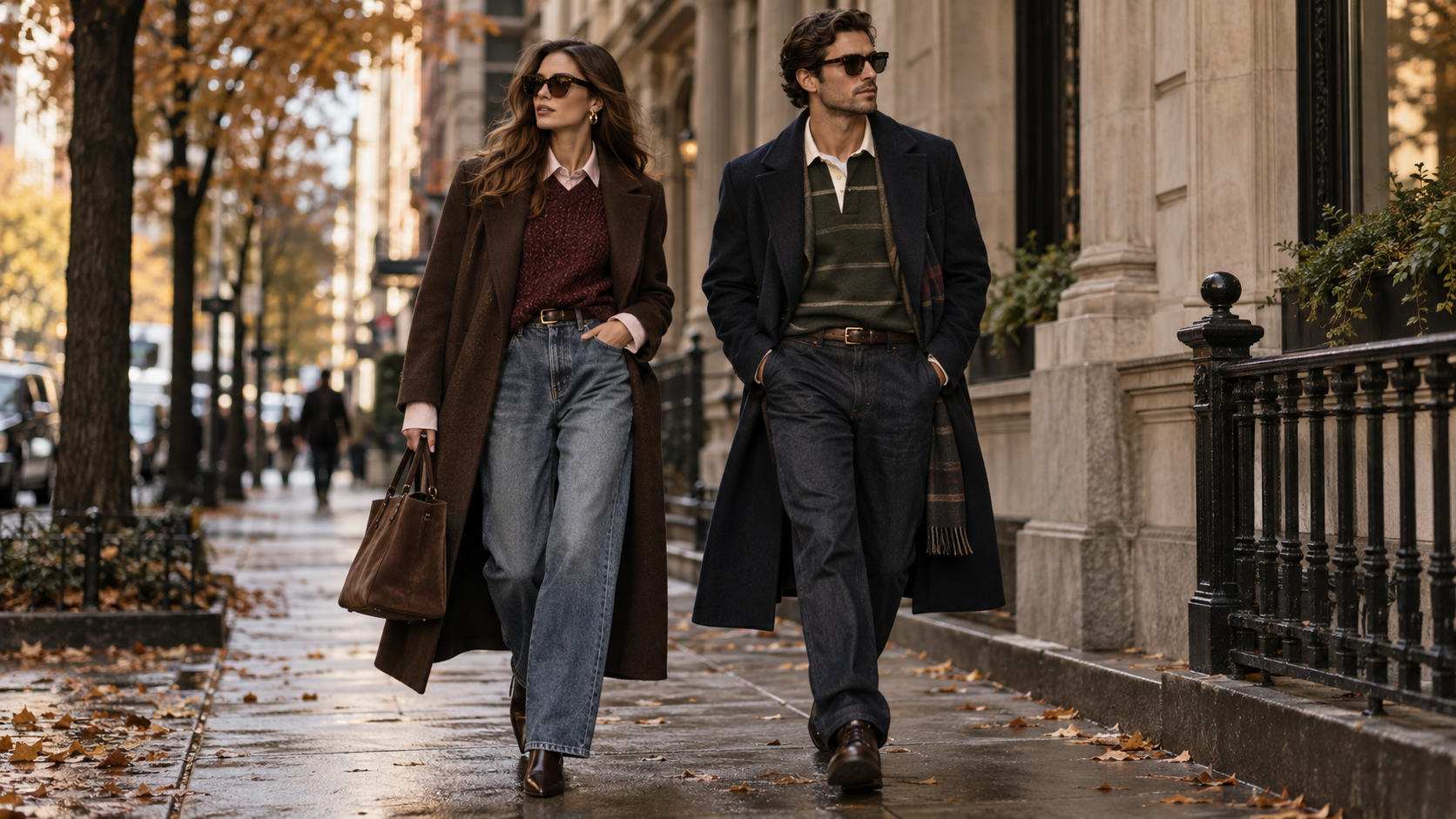
To make a coat work with your outfit, check the coat length, the clothes beneath it and the shoes as one combination. Try it open and fastened. Then change the specific thing that bothers you: the visible hem, crowded sleeves or collar, or the footwear. Then try moving in it.
You like the outfit. You add the coat. Suddenly, everyone appears to have arrived at a different party.
Before the bedroom becomes a garment evacuation zone, pause. You may only need to change how two pieces meet. Here’s how to find that meeting point, using the clothes you already own.
1. Find the part that changes when the coat goes on
Put on the whole outfit, including the shoes and layers you need for the weather. Use a mirror or take full-length photos from the same position: without the coat, with it open, then with it fastened as you’ll actually wear it. Add a side view if fabric is gathering somewhere you can’t see from the front.
Look for a specific difference:
- At the hem: Does the coat reveal a band of skirt or dress you hadn’t noticed? Does a jacket cover the top of your trousers in a way you don’t enjoy?
- Inside the coat: Are sleeves riding up, a sweater gathering under the arms or the front pulling when you fasten it?
- At the neckline: Is a shirt collar folded under a lapel? Is the scarf pushing a collar into your chin?
- At the shoes: Can you still see the detail you liked, or has the closed coat changed how the footwear looks with everything above it?
Name the issue without making your body the problem. “These sleeves bunch inside this jacket” gives you something to change. “I look wrong” sends the whole wardrobe to a very unhelpful committee.
For a broader starting point, Why Some Outfits Feel “Off” explores changing one part of a combination. Here, keep your attention on what the coat adds, covers or compresses.
2. Compare one change at a time
The coat and dress hems feel disconnected
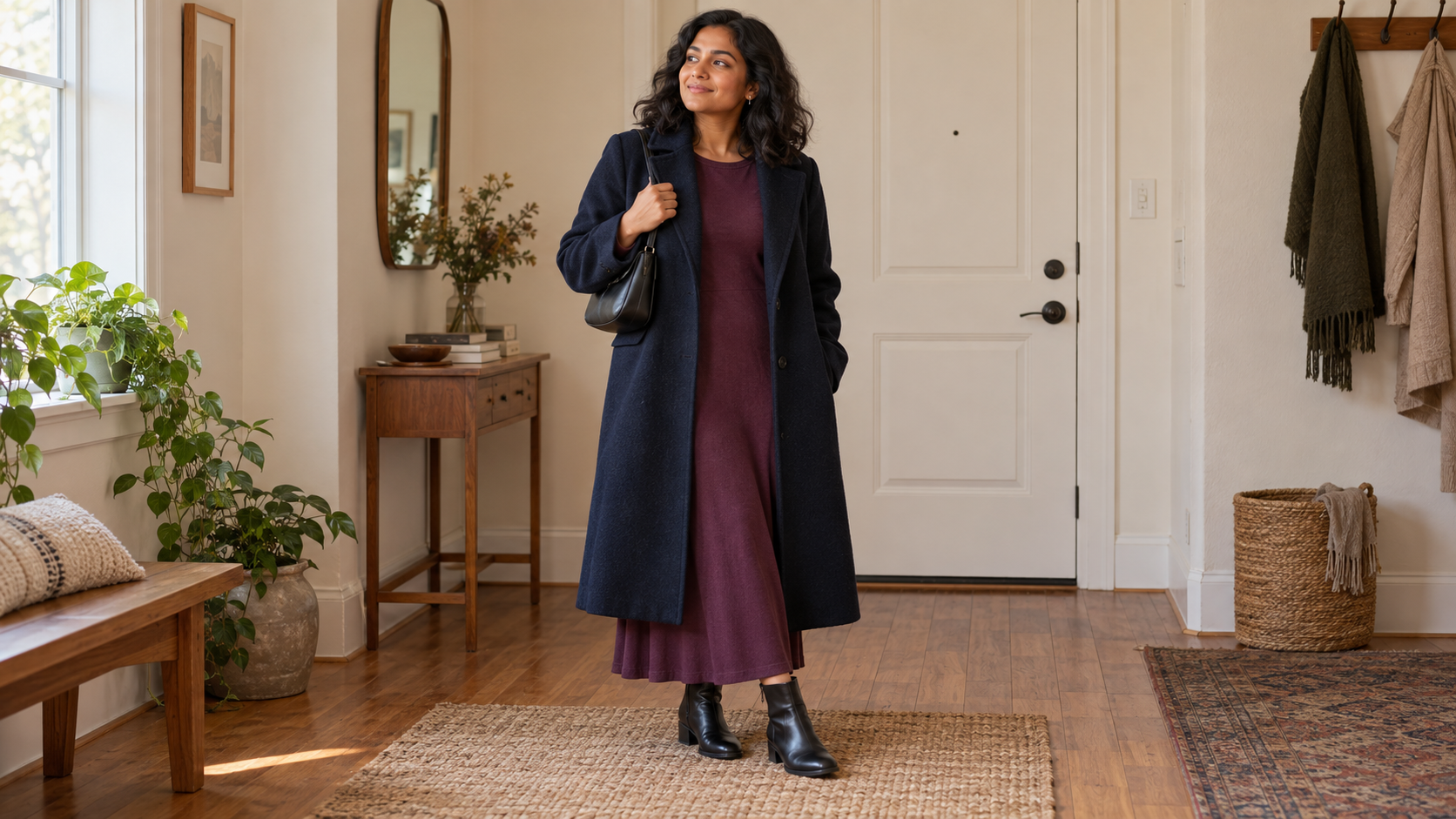
Start with: An ankle-length dress, ankle boots and a coat that ends just below the knee. You like the dress-and-boots combination indoors, but want a more continuous outline with the coat fastened. The broad section of dress below the coat hem interrupts that effect.
Change only the coat: Try a longer coat you already own, ending nearer the dress hem while still leaving some dress visible. Keep the dress and boots.
What to compare: With the coat fastened, the longer version covers more of the dress, leaving a smaller block of dress above the boots. Open it and more dress appears down the front. The same coat can give you quite different amounts of visible dress in those two positions.
Neither hem arrangement is automatically better. The longer coat is the useful candidate especially if you want to appear taller. If you enjoy the broader band of color in the first version, keep it, knowing that it breaks your vertical line. A dress is allowed to show below a coat, but pay attention to contrast and how much of a visual vertical break it creates.
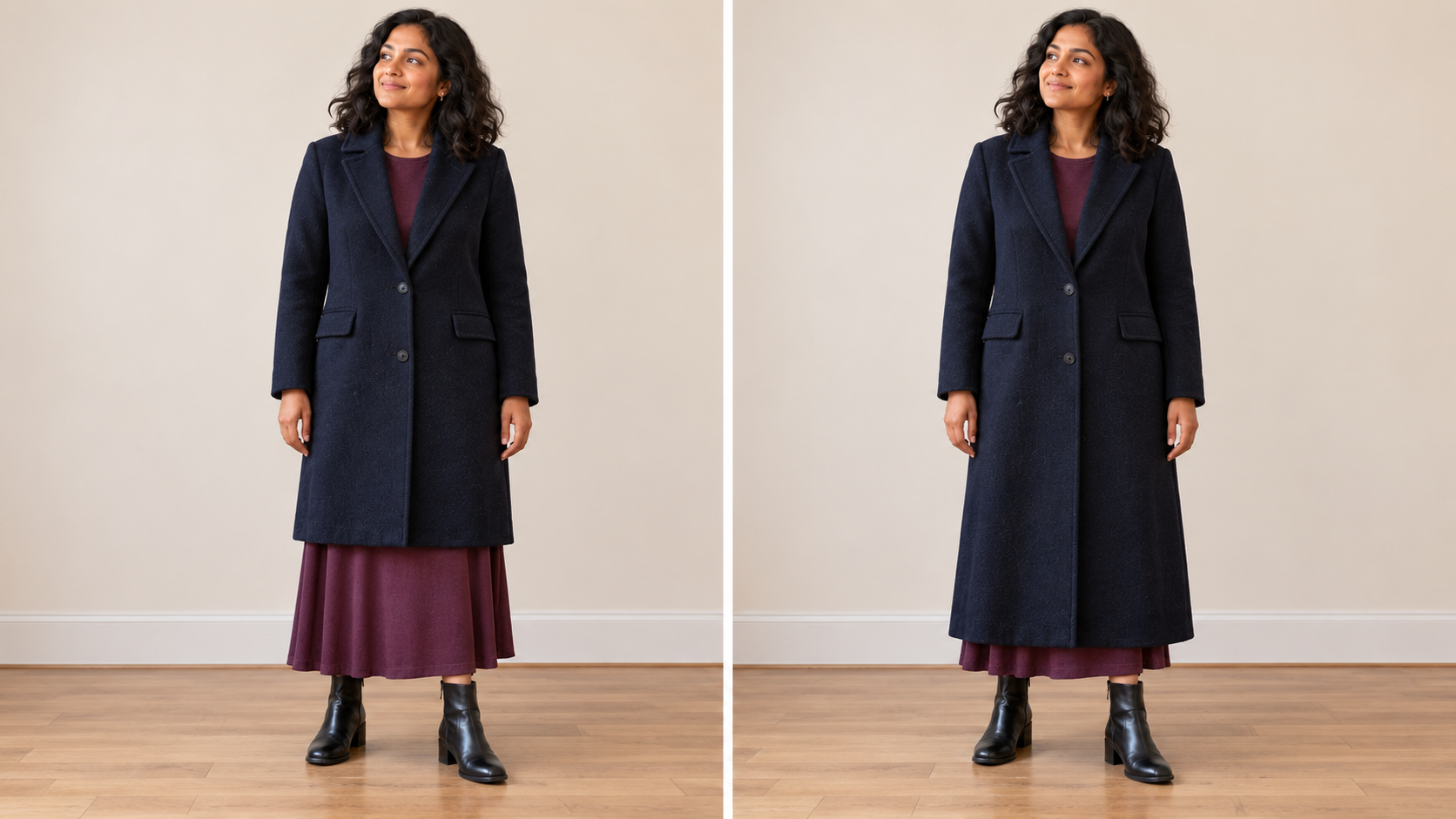
Only have one coat? Make a separate shoe comparison. Keep the coat and dress fixed, and try another weather-suitable pair you own. Compare whatever is visible below the dress: the toe shape, sole and any exposed boot shaft. A different pair may change that final detail even when the dress covers most of the footwear. Check it fastened, too. Don’t change the coat and shoes together and then wonder which one helped.
A short jacket looks good with fuller trousers but traps the sweater
Start with: Wide-leg trousers, sneakers, a roomy sweater and a short jacket. You like where the jacket ends, but the sweater’s sleeves gather inside it. Reaching forward pulls at your upper arms.
Change only the outer layer: If you own another short jacket, try one with more room through the sleeves and torso. Keep the sweater, trousers and sneakers. A similar hem length lets you preserve the jacket-and-trouser relationship you liked while checking the layering problem separately.
What to compare: Look at the sleeves from the side, fasten the jacket without forcing it and reach forward again. More room is only useful if this particular combination lets you move comfortably; the size label alone won’t answer that.
No second jacket? Try a less bulky owned layer underneath, provided it still gives you the warmth you need. Keep the original jacket and everything else for this comparison. If changing the sweater makes you cold, that version hasn’t solved your day. Save the roomy sweater for outerwear that can accommodate it.
You don’t need to narrow the trousers just because the sleeves are crowded. Fix the place where the clothes are getting in each other’s way.
The collar and scarf are competing for the same space
Start with: A collared shirt, trousers, shoes and a lapel coat. Add a thick scarf wrapped twice, and the shirt collar folds awkwardly while the scarf crowds your chin.
Change only the scarf arrangement: Try one comfortable wrap, with the ends lying inside the coat if its shape and fastening allow it. Leave the coat, shirt and shoes alone.
What to compare: Can the shirt collar and coat lapels lie where you want them? Fasten the coat and turn your head comfortably in both directions. Then check the open version. An arrangement that looks tidy but needs constant tugging is going to become a very long evening.
If the same scarf still crowds the neckline, make another comparison with a thinner scarf you already own. Keep enough coverage for the weather. Don’t count “remove the thing keeping me warm” as a styling triumph.
3. Give the complete outfit a normal-life check
Once you have a version you like, try the movements your day involves. Adapt these to how you move:
- Fasten the coat. Does it close comfortably over the actual layers? If the forecast calls for a closed coat, an open-only outfit needs another plan.
- Reach and sit. Reach forward, use your pockets and sit in a familiar chair. Notice pulling, bunched fabric or a fastening you’ll need to release while seated.
- Move in the shoes. Walk or move as usual, turn and check hem clearance. A different sole height can change where a trouser or dress hem meets the ground.
- Add your bag. Put it where you normally carry it. Check whether its strap catches a lapel, dislodges the scarf or pulls the coat into an uncomfortable position.
A photo can help you compare visible lengths. It can’t tell you whether you can comfortably reach for your keys. Both checks earn their place.
When the combination works, create and save the complete outfit in OpenWardrobe, including the outer layer and shoes. Keep a photo of any scarf arrangement you want to remember. Tomorrow’s you has enough going on without reverse-engineering a knot.
Coat outfit FAQs
Does my coat have to be longer than my skirt or dress?
No. A visible skirt or dress hem can be part of the look. Compare how much shows with the coat open and fastened, then look at the shoes and any gap above them. Choose the relationship you enjoy, with enough hem clearance and comfortable movement for your day.
How can I test an outfit with a coat before buying a different one?
Wear the complete outfit and identify one specific issue. Compare an owned alternative coat, a shoe change or a different scarf arrangement one at a time. If you keep noticing the same restriction across outfits, you’ll have a concrete requirement to investigate, such as more sleeve room, rather than a vague need for a “better” coat.
Your next move
Try one coat with two outfits you already wear. Pick the combination you want to reach for tomorrow, check it fastened and moving, and save it with the shoes. Coat included. Plot twist resolved.