.svg)

A sweater’s fiber percentages tell you what its textile fibers are and their proportions by weight. They can’t, on their own, predict softness, pilling or how the sweater should be washed. For a useful comparison, read the composition, look at construction and actual wear, then check the finished garment’s care instructions.
“Cashmere blend” sounds lovely. It also leaves a few questions. How much cashmere? Blended with what? How much attention will it expect on laundry day?
That tiny label can help. Here’s how to use it without asking it to predict your entire relationship with a cardigan.
1. Find the full fiber breakdown
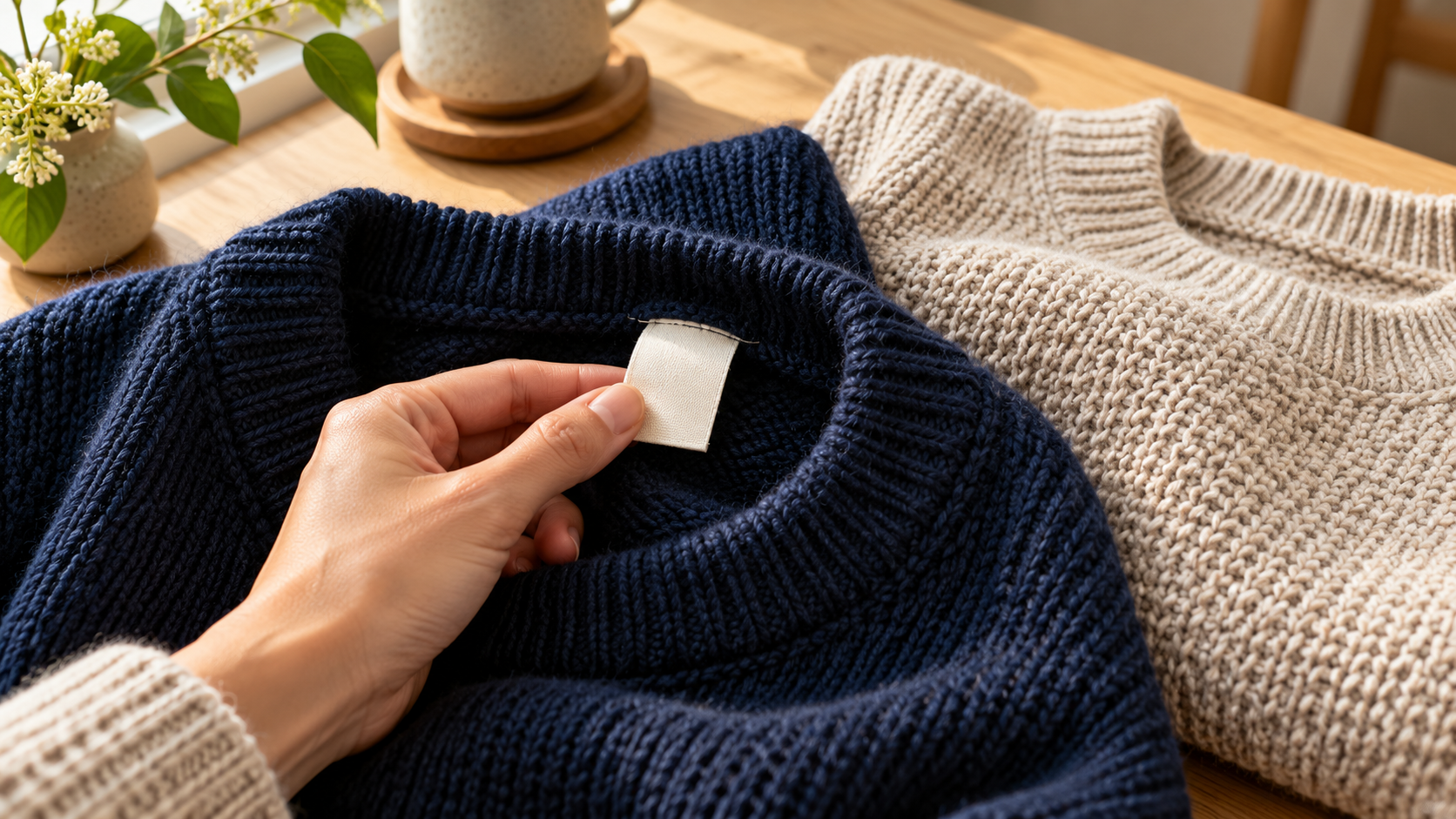
Start with the composition label inside the sweater, rather than stopping at a hangtag’s “cashmere blend” description.
For garments covered by U.S. textile and wool labeling rules, composition is disclosed by fiber weight. A 10% cashmere statement describes cashmere’s share of the labeled fiber content. It doesn’t mean 10% of the stitches, or tell you how the yarn was made. Buttons and other non-fiber components aren’t part of that calculation. Pay attention to qualifiers such as “body” or “exclusive of decoration,” too. The FTC’s labeling guide explains the U.S. requirements and permitted exclusions.
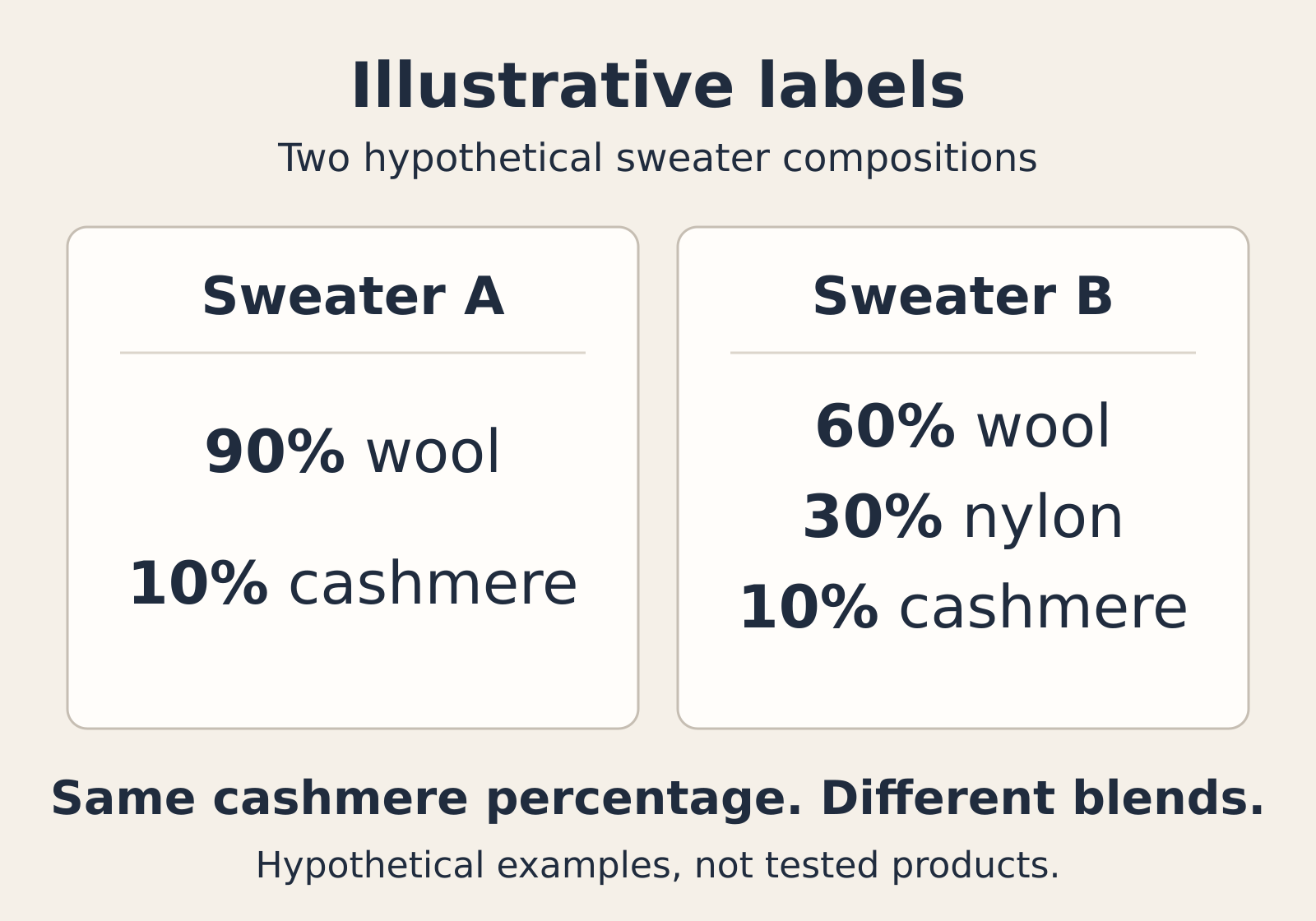
Consider these two hypothetical composition labels. They’re teaching examples, not products we’ve tested:
- Sweater A: 90% wool, 10% cashmere
- Sweater B: 60% wool, 30% nylon, 10% cashmere
Both list the same cashmere percentage, with a different mix of other fibers. Now you have something more specific than “cashmere blend.” You still need to examine the sweaters themselves before choosing between them.
If you want the broader warm-weather fabric discussion, our Summer Fabric Audit covers that territory. Here, we’re investigating what the numbers leave out.
2. Look beyond percentages to construction and wear
Composition tells you the ingredients. The yarn and the knit determine how those ingredients are put together. A percentage label won’t usually tell you the length of the individual fibers, how tightly the yarn is twisted or how densely the fabric is knitted.
Pilling makes the limits easier to understand. Those little balls on the surface are called pills, and rubbing during wear can lead to them. Woolmark’s explanation of pilling identifies fiber length, yarn twist, fabric construction and abrasion during wear as relevant factors. A blend percentage can’t capture all of that.
So a pill is a reason to investigate, rather than enough evidence to pronounce a sweater badly made. A fluffy surface or tight knit also needs more context before you treat it as a quality verdict.
For a sweater you own, look at what has actually happened:
- Where has the surface changed? Check the underarms, sides and places that rub against a bag or desk. Is the change localized or widespread?
- How has the shape held up? Compare the cuffs, hem and body with how you remember them fitting. Separate a deliberately relaxed shape from a change you’ve noticed.
- How does it feel during a normal day? Try it with the layer you usually wear underneath. Record your own comfort, rather than what the fiber name suggests you ought to feel.
Look closely at the two knits and describe what you can see: open stitches, a compact surface, a fuzzy finish. Keep the conclusion that modest. Even a detailed close-up can’t establish how either sweater will perform after months of wear.
One more thing: a sweater you’ve worn weekly has a different history from one that has barely left the drawer. Note that before declaring a winner. The hardworking one deserves a fair hearing.
3. Read care instructions for the whole sweater
Turn to the care label before deciding on a wash method. The largest fiber percentage doesn’t get to overrule it.
GINETEX’s care-label principles explain that care guidance accounts for the garment’s most sensitive features, including dyes, finishes and accessories. Two sweaters with the same composition can therefore need different care.
Read the whole sequence, including drying instructions and any warnings. “Machine washable” answers only part of the laundry question. If a label is missing or unclear, ask the brand for guidance on that specific style before choosing a method from a general fiber guide.
Then be honest about the routine. Would you make space for drying flat if required? Is a trip to the cleaner workable? Would you happily hand-wash this piece, or would it join the small, dignified pile of clothes awaiting a better version of your schedule?
Your answer belongs in the buying decision. A care routine that fits your life is a useful requirement, not a character test.
Compare two sweaters you already own
Take out one sweater you reach for often and one you’re less sure about. Give each a short record:
- Label: Copy the complete composition and any section qualifiers.
- Construction: Describe the knit and surface without assigning a quality score.
- Wear: Note comfort, shape changes and where you see pilling. Add roughly how often you’ve worn it; an estimate is fine.
- Care: Copy the garment’s instructions and note whether that routine works for you.
- Next time: Name one thing you’d want to repeat or change.
Here’s how to use our hypothetical labels in that comparison. If you want an everyday sweater that feels comfortable over a T-shirt and fits your laundry routine, neither A’s nor B’s numbers settle the choice. Check each garment against those two requirements. Leave anything you haven’t observed marked “unknown.” No need to give a sweater imaginary extra credit.
Your eventual brief might read: “Comfortable over my usual T-shirt, with cuffs that stay where I want them and care instructions I can realistically follow.” Add the specific composition of a sweater you’ve enjoyed as a reference, while staying open to other blends that meet your needs.
If these pieces are in OpenWardrobe, check their item details against the actual garments and correct anything inaccurate. You can update item details as you learn more about what you own.
Sweater label FAQs
Does a higher wool or cashmere percentage guarantee a better sweater?
No. It tells you more of that fiber is present by weight, but quality and suitability also depend on how the sweater is made and how it works for you. Compare construction, observed wear, comfort and care. There’s no universal winning percentage.
Can I choose a wash method just by looking at the main fiber?
No. Follow the finished sweater’s care instructions, including drying and warnings. Dyes, finishes and other components can affect suitable care. When the label is missing or unclear, seek guidance for that garment rather than guessing from its main fiber.
Your next move
Before browsing for another sweater, compare the labels and real-life performance of two you own. Write down one thing you want your next sweater to do well. That’s a much more useful starting point than hoping the fanciest word on the tag has it handled.