.svg)

Some summer outfits look great in theory.
Then you step outside.
Suddenly your cute top has become cling wrap. Your trousers are making personal threats. Your dress is sticking in places you did not invite it to stick. And your entire outfit is giving, “I made choices before checking the weather.”
Summer dressing is not just about color, cut, or whether an outfit looks good in the mirror. It is also about fabric.
The right fabric can help you feel cooler, more comfortable, and more put-together when it’s hot, humid, sticky, sunny, windy, or all of the above because apparently weather likes range. The wrong fabric can turn a perfectly nice outfit into a tiny portable sauna.
This guide will help you audit your summer wardrobe, understand which fabrics work best in hot weather, and figure out what to wear when it’s humid, sweaty, or just generally rude outside — using clothes you already own whenever possible.
Quick Answer: What Are the Best Fabrics for Hot and Humid Weather?
The best fabrics for hot and humid weather are usually breathable, lightweight, and moisture-friendly, such as linen, cotton, cotton poplin, chambray, lightweight denim, silk, viscose, rayon, lyocell, and some technical performance fabrics.
In general, look for summer clothes that:
- Let air move through the fabric
- Feel light on the body
- Do not cling too tightly
- Dry reasonably quickly
- Have a looser or more relaxed fit
- Feel comfortable against sweaty skin
- Work with your actual lifestyle
The best summer outfit is not always the thinnest outfit. It is the one that balances fabric, fit, airflow, coverage, and comfort.
Tiny wardrobe plot twist: sometimes a loose long-sleeve linen shirt is cooler than a tight synthetic tank top. Summer loves irony.
Why Fabric Matters So Much in Summer
When it’s hot, your clothes have more jobs than usual.
They need to:
- Keep you comfortable
- Let your skin breathe
- Handle sweat
- Resist clinging
- Avoid trapping heat
- Protect you from the sun
- Move with your body
- Still look like an outfit, not a weather-related surrender
That is a lot to ask from a shirt.
Fabric affects how your clothes feel, how much air circulates, how quickly sweat dries, how much heat gets trapped, and how polished the outfit looks after a few hours.
This is why two similar-looking dresses can perform completely differently in summer. A loose cotton poplin dress may feel crisp and breezy. A tight polyester dress may feel like being slowly laminated.
Same category. Very different experience.
Start With a Summer Fabric Audit
Before buying anything new for summer, audit what you already own.
Pull out the pieces you tend to wear (or avoid) when it’s hot. Then sort them into three groups.
Group 1: The Summer Heroes
These are the pieces you reach for again and again because they work.
They may be:
- Linen trousers
- Cotton dresses
- Loose button-down shirts
- Lightweight skirts
- Breezy tops
- Soft tees
- Shorts that actually fit
- Dresses that do not cling
- Sandals that do not betray you
- Layers that protect from sun without overheating you
Ask: What do these pieces have in common?
Look at the fabric, fit, color, shape, and weight. Your best summer clothes are already giving you data. Very generous of them.
Group 2: The Summer Traitors
These are the clothes that look promising but disappoint you in the heat.
They may:
- Trap sweat
- Cling
- Show every damp patch
- Feel scratchy
- Wrinkle in a way you hate
- Stick to your body
- Smell quickly
- Make you overheat
- Require constant adjusting
Ask: Why don’t I wear this when it’s hot?
The answer might be fabric. It might be fit. It might be color. It might be that the waistband is rude. Be honest.
Group 3: The Maybe Pieces
These are the clothes you are not sure about.
Try them on and ask:
- Is the fabric breathable?
- Is the fit too tight for heat?
- Does it work with summer shoes?
- Can I sit and walk comfortably?
- Does it show sweat in a way that bothers me?
- Does it need a better styling formula?
- Would I wear this on a hot day, or only in air conditioning?
Some “maybe” pieces can be saved with better styling. Others are simply not summer clothes, no matter what the calendar says.
The Best Fabrics to Wear in Hot Weather
Let’s break down the most common summer fabrics and how to use them well.
1. Linen
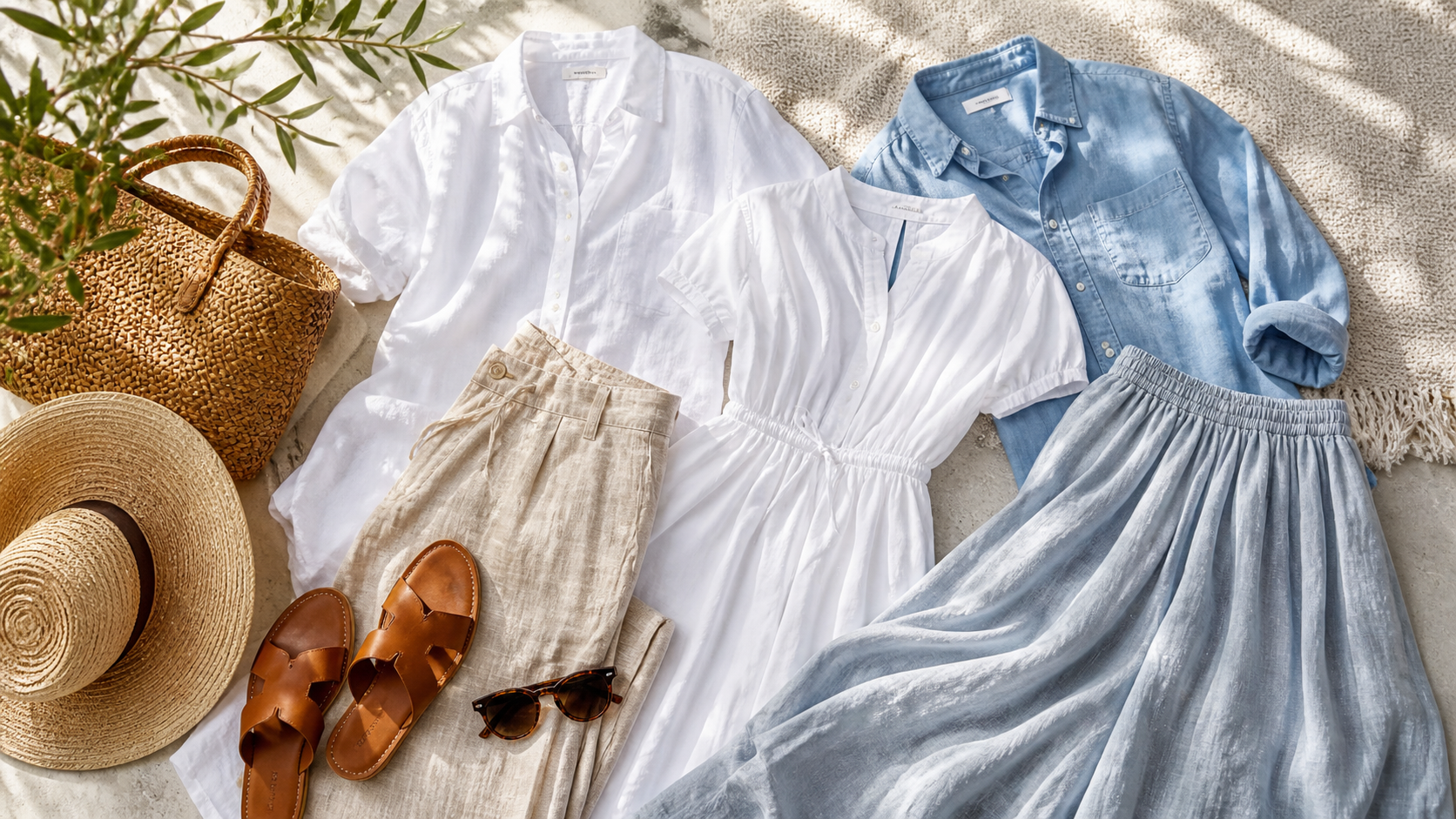
Linen is the summer fabric everyone talks about because it genuinely performs well in heat. It is breathable, lightweight, and has a relaxed texture that looks right in warm weather.
Best linen pieces for summer:
- Linen shirts
- Linen trousers
- Linen dresses
- Linen shorts
- Linen blazers
- Linen skirts
- Linen matching sets
Why it works:
- Breathable
- Lightweight
- Naturally relaxed
- Good for airflow
- Looks intentional even when casual
The catch:
Linen wrinkles. This is not a flaw. This is linen’s entire personality.
If you need your outfit to stay perfectly crisp for eight hours in humidity, linen may not be the emotional support fabric you want. But if you like relaxed polish, linen is excellent.
How to wear linen without looking messy
Try:
- Choosing slightly structured linen pieces
- Wearing linen blends if you want fewer wrinkles
- Pairing linen with polished accessories
- Steaming it before wearing
- Choosing intentional colors like white, navy, black, olive, tan, or soft blue
- Avoiding linen that is too sheer or flimsy
A linen shirt with tailored shorts, good sandals, and clean jewelry can look effortless. A linen shirt pulled from a drawer and worn with chaotic flip-flops may look like you lost a fight with a beach bag.
Fabric is only part of the story. Styling still gets a vote.
2. Cotton
Cotton is a classic summer fabric because it is breathable, widely available, and comfortable against the skin.
Best cotton pieces for summer:
- T-shirts
- Button-down shirts
- Poplin dresses
- Cotton skirts
- Shorts
- Lightweight trousers
- Eyelet tops
- Cotton cardigans
- Gauze shirts
Why it works:
- Breathable
- Comfortable
- Easy to wash
- Versatile
- Works for casual and polished outfits
The catch:
Not all cotton is the same. A thick cotton sweatshirt is not summer-friendly just because cotton is involved. Fabric weight matters.
Best cotton types for summer
Look for:
- Cotton poplin
- Cotton voile
- Cotton lawn
- Cotton gauze
- Lightweight jersey
- Cotton seersucker
- Cotton eyelet
- Chambray
Be careful with:
- Thick jersey
- Heavy denim
- Stiff cotton twill
- Very tight cotton blends
- Cotton pieces that become heavy when damp
Cotton is great, but in humidity it can hold moisture. A loose cotton dress will usually feel better than a tight cotton tee that stays damp.
3. Cotton Poplin
Cotton poplin deserves its own little applause break.
It is crisp, smooth, lightweight, and great for summer pieces that need a bit of structure. If you want to look polished when it’s hot, cotton poplin is your friend.
Best poplin pieces:
- Button-down shirts
- Shirt dresses
- Full skirts
- Summer tops
- Tailored shorts
- Lightweight trousers
Why it works:
- Crisp but breathable
- Holds shape better than soft jersey
- Looks polished
- Great for work, travel, and events
The catch:
It can wrinkle, though usually in a cleaner way than linen. It may also feel stiff if the fit is too tight.
How to style cotton poplin
Try:
- Poplin shirt + linen trousers
- Poplin dress + flat sandals
- Poplin blouse + tailored shorts
- Poplin skirt + fitted tank
- Oversized poplin shirt + relaxed jeans
Poplin is excellent when you want an outfit that says, “I am comfortable,” but also, “I did not give up.”
4. Chambray
Chambray looks a bit like denim but is usually lighter and more breathable. It is a great warm-weather alternative if you like denim but do not want to roast.
Best chambray pieces:
- Button-down shirts
- Shirt dresses
- Lightweight pants
- Shorts
- Skirts
Why it works:
- Casual but polished
- Lighter than denim
- Easy to style
- Works with white, tan, navy, olive, and bright colors
The catch:
Some chambray can still be too thick, so check the fabric weight.
How to wear chambray in summer
Try:
- Chambray shirt + white jeans
- Chambray dress + sandals
- Chambray shirt worn open over a tank
- Chambray top + linen shorts
- Chambray skirt + white tee
It gives denim energy without the “why are my legs in a furnace?” experience.
5. Silk
Silk can be beautiful in summer because it is lightweight and breathable, but it can also be high-maintenance depending on the piece.
Best silk pieces for summer:
- Silk camisoles
- Silk blouses
- Silk scarves
- Silk dresses
- Silk skirts
Why it works:
- Lightweight
- Elegant
- Good drape
- Looks polished
- Works well for summer events
The catch:
Silk can show sweat, require careful cleaning, and feel clingy in some cuts. It is not always ideal for extremely sweaty days unless the garment is loose and the color is forgiving.
How to wear silk in summer
Try:
- Silk cami + wide-leg trousers
- Silk blouse + cotton skirt
- Silk scarf + simple dress
- Silk skirt + crisp cotton shirt
- Silk dress + flat sandals for evening
Avoid tight silk pieces in very humid weather unless you know the fabric behaves well on you. Silk can be glamorous, but it is not always interested in doing manual labor.
6. Viscose and Rayon
Viscose and rayon are semi-synthetic fabrics made from cellulose fibers. They often feel soft, drapey, and breathable, which can make them useful in summer.
Best pieces:
- Dresses
- Blouses
- Skirts
- Wide-leg pants
- Lightweight jumpsuits
Why they work:
- Soft
- Drapey
- Often breathable
- Good for flowy summer silhouettes
- Usually comfortable against the skin
The catch:
Some rayon or viscose fabrics wrinkle easily, shrink if washed incorrectly, or become weak when wet. Quality varies a lot.
How to choose rayon or viscose for summer
Look for:
- Looser cuts
- Good drape
- Opaque fabric
- Easy-care labels if you hate dry cleaning
- Prints that hide wrinkles or sweat
- Pieces you can wash or maintain realistically
Avoid:
- Very thin clingy versions
- Pieces that twist at the seams
- Fabrics that shrink dramatically
- Tight fits in humidity
Viscose can be a summer hero or a laundry villain. Always check the care label. The care label is not decorative. Sadly.
7. Lyocell and Tencel
Lyocell, often sold under the brand name Tencel, is usually soft, smooth, and breathable. It can be a great option for warm-weather trousers, dresses, shirts, and relaxed denim alternatives.
Best pieces:
- Soft trousers
- Shirt dresses
- Button-down shirts
- Jumpsuits
- Lightweight jackets
- Relaxed pants
Why it works:
- Soft feel
- Good drape
- Often breathable
- Smooth texture
- Can look more polished than jersey
The catch:
It can wrinkle and sometimes show water marks depending on the garment. Some pieces need careful washing.
How to wear lyocell in summer
Try:
- Lyocell trousers + cotton tank
- Tencel shirt + white jeans
- Lyocell dress + sandals
- Soft jumpsuit + belt
- Tencel shirt worn open as a layer
This is a great fabric category for people who want comfort but do not want everything to look beachy.
8. Seersucker
Seersucker is a warm-weather classic for a reason. Its puckered texture lifts the fabric slightly away from the skin, helping with airflow.
Best pieces:
- Shirts
- Dresses
- Shorts
- Skirts
- Lightweight blazers
- Summer suits
Why it works:
- Lightweight
- Textured
- Breathable
- Doesn’t need to be perfectly smooth
- Looks summery and polished
The catch:
It has a specific look. Some seersucker can feel preppy, which may or may not be your style.
How to make seersucker feel modern
Try:
- Seersucker shirt + relaxed trousers
- Seersucker shorts + simple tank
- Seersucker blazer + jeans
- Seersucker dress + minimal sandals
- Seersucker set with simple accessories
Keep the rest of the outfit clean so it does not drift into costume territory.
9. Lightweight Denim
Denim in summer is tricky but not impossible.
Heavy denim can feel awful in heat. Lightweight denim, chambray-like denim, or relaxed denim can work better.
Best summer denim pieces:
- Lightweight jeans
- Denim skirts
- Denim shorts
- Chambray shirts
- Lightweight denim dresses
- Relaxed denim jackets for evenings
Why it works:
- Durable
- Easy to style
- Familiar
- Good for casual outfits
The catch:
Denim can trap heat, especially if tight, heavy, or dark.
How to wear denim in summer
Try:
- Loose light-wash jeans + tank
- Denim skirt + cotton blouse
- Denim shorts + linen shirt
- Lightweight denim dress + sandals
- White denim + breezy top
Avoid skinny heavy denim on very hot days unless you are committed to the bit.
10. Technical Performance Fabrics
Some performance fabrics are excellent for heat, especially if you are walking, traveling, exercising, or commuting.
Best pieces:
- Travel pants
- Active dresses
- Athletic tops
- Lightweight jackets
- Skorts
- Hiking or walking clothes
- Moisture-wicking underwear
Why they work:
- Moisture-wicking
- Quick-drying
- Lightweight
- Often wrinkle-resistant
- Good for active days
The catch:
Some synthetic performance fabrics can hold odor or look too sporty for certain settings. They can also trap heat if not designed well.
How to use performance fabrics without looking like you’re going on a hike
Try:
- Sleek travel pants + linen shirt
- Performance tank under a cotton button-down
- Athletic dress + polished sandals
- Technical trousers + simple tee + clean sneakers
- Moisture-wicking underlayers beneath regular clothes
Performance fabrics are useful. Just style them intentionally if the day involves more than trail mix.
Fabrics to Be Careful With in Hot Weather
No fabric is automatically bad. But some fabrics are more likely to cause problems in heat or humidity.
Polyester
Polyester is common, affordable, and can be useful in certain blends or performance fabrics. But many everyday polyester garments are not breathable enough for hot, humid weather.
Be careful with:
- Tight polyester dresses
- Polyester blouses
- Thick polyester trousers
- Lined polyester pieces
- Polyester satin in high heat
- Polyester items that trap odor
Polyester can work if it is lightweight, loose, or designed for performance. But if it feels like plastic against your skin indoors, it is not going to become charming outside in August.
Nylon
Nylon can be great in technical fabrics, swimwear, and outerwear, but not all nylon pieces are comfortable in heat.
Be careful with:
- Non-breathable nylon tops
- Thick nylon trousers
- Tight nylon blends
- Pieces that trap sweat
Useful for:
- Activewear
- Rain shells
- Travel pieces
- Swim-related clothing
Nylon is best when it has a clear purpose.
Acrylic
Acrylic often appears in sweaters and knitwear. It can be warm, less breathable, and not ideal for summer unless the piece is very lightweight and worn in cool indoor settings.
Be careful with:
- Acrylic cardigans
- Acrylic knits
- Sweaters marketed as lightweight but still warm
Summer evenings may need a layer, but choose cotton, linen, silk, or fine lightweight blends when possible.
Thick Jersey
Jersey can be comfortable, but thick or clingy jersey can trap heat and show sweat.
Be careful with:
- Tight jersey dresses
- Thick jersey tees
- Clingy skirts
- Heavy jersey jumpsuits
Look for:
- Lightweight jersey
- Looser fits
- Breathable blends
- Darker colors or prints if sweat visibility bothers you
Jersey is cozy. Summer is not always cozy. Sometimes summer is a toaster with pollen.
Faux Leather
Faux leather and high heat are usually not close friends.
Be careful with:
- Faux leather pants
- Faux leather skirts
- Faux leather shorts
- Faux leather jackets
Maybe save them for cooler evenings, indoor events, or air-conditioned spaces where you are not walking far.
Your legs deserve ventilation. That is all.
How Fit Affects Summer Comfort
Fabric matters, but fit can matter just as much.
A breathable fabric in a tight cut can still feel hot. A less breathable fabric in a loose cut may feel better than expected.
In summer, look for:
- Room around the body
- Easy arm movement
- Waistbands that do not dig
- Skirts and dresses that allow airflow
- Pants with a relaxed leg
- Tops that do not cling at the underarm
- Sleeves that allow movement
- Shorts that do not ride up
You do not need oversized everything. You just need airflow.
Think:
- Skimming, not squeezing
- Structured, not suffocating
- Breezy, not shapeless
- Comfortable, not sloppy
The body is not the issue. The air needs somewhere to go.
What to Wear When It’s Hot and Humid
Humidity changes everything because sweat does not evaporate as easily. That means clothes can feel damp, sticky, and heavier.
For humid weather, prioritize:
- Loose silhouettes
- Breathable fabrics
- Prints or darker colors if sweat marks bother you
- Lightweight layers
- Open necklines
- Shorts, skirts, dresses, or loose trousers
- Shoes that allow airflow
- Moisture-wicking underlayers if needed
Good humid-weather outfits:
- Linen shirt + loose cotton shorts + sandals
- Cotton poplin dress + flat sandals
- Viscose midi dress + simple jewelry
- Tank + wide-leg linen pants + slides
- Cotton skirt + sleeveless blouse
- Chambray shirt + white shorts
- Technical travel pants + breathable tee
Avoid:
- Tight polyester
- Heavy denim
- Thick jersey
- Clingy satin
- Unlined pieces that become sheer when damp
- Shoes that rub when feet swell
Humidity is already doing too much. Your outfit should not join in.
What to Wear When It’s Hot but Dry
Dry heat is different. Sweat evaporates more easily, but sun exposure can be intense.
For hot, dry weather, prioritize:
- Breathable fabrics
- Sun coverage
- Lightweight long sleeves
- Hats
- Sunglasses
- Looser silhouettes
- Natural fibers
- Light or mid-tone colors
Good hot-dry-weather outfits:
- Loose linen trousers + sleeveless top + sun hat
- Cotton shirt dress + sandals
- Lightweight long-sleeve linen shirt + shorts
- Maxi skirt + cotton tank
- Chambray shirt + loose trousers
- Loose cotton dress + sunglasses
In dry heat, coverage can actually help. A loose long-sleeve shirt may be cooler and more protective than a tiny top that leaves your skin fully exposed.
What to Wear When You Sweat Easily
First: sweating is normal. Bodies regulate temperature. Very inconsiderate visually sometimes, but normal.
If you sweat easily, choose clothes that help you feel less self-conscious and more comfortable.
Try:
- Dark colors
- Prints
- Textured fabrics
- Loose underarms
- Breathable fabrics
- Moisture-wicking base layers
- Sleeveless or open-neck tops
- Washable pieces
- Structured fabrics that do not cling
- Extra undershirts if needed
Be careful with:
- Pale gray
- Light blue
- Tight silk
- Thin jersey
- Satin in high-sweat areas
- Anything dry-clean-only for everyday heat
Good outfit ideas:
- Printed dress + sandals
- Black linen trousers + sleeveless top
- Navy cotton dress
- Patterned skirt + loose blouse
- Dark tee + chambray shirt worn open
- Loose jumpsuit in a breathable fabric
Choose clothes that let you live your life instead of monitoring your underarms like a security camera.
What to Wear to Work When It’s Hot
Summer workwear needs the most strategy because you may be dealing with heat outside and freezing air conditioning inside.
Good summer work fabrics:
- Cotton poplin
- Linen blends
- Lightweight wool blends
- Silk or washable silk
- Lyocell
- Viscose
- Lightweight crepe
- Fine cotton knits
Good summer work outfit formulas:
- Cotton poplin shirt + wide-leg trousers
- Linen-blend blazer + shell + tailored pants
- Midi dress + lightweight blazer
- Sleeveless blouse + skirt + cardigan
- Lyocell trousers + button-down shirt
- Lightweight suit + breathable top
- Cotton dress + loafers
Keep a work layer nearby:
- Lightweight blazer
- Cotton cardigan
- Linen jacket
- Fine knit sweater
- Scarf or wrap
The goal is to survive both the sidewalk and the office thermostat, which are apparently managed by rival departments.
What to Wear to Summer Events in the Heat
Summer events require fabrics that look polished but do not make you miserable.
Good event fabrics:
- Cotton poplin
- Linen blends
- Silk
- Satin, if not too clingy
- Viscose
- Lyocell
- Lightweight crepe
- Eyelet
- Chiffon or georgette layers
- Seersucker
Good event outfit ideas:
- Cotton poplin dress + block heels
- Linen-blend suit + sandals
- Silk blouse + wide-leg trousers
- Viscose midi dress + earrings
- Eyelet dress + flat sandals
- Lightweight jumpsuit + structured bag
- Seersucker dress + minimal jewelry
Avoid:
- Heavy polyester
- Tight satin in humidity
- Thick lining
- Shoes that make you suffer
- Anything that requires constant adjusting
- Fabrics that become sheer in sunlight
Sunlight is an honest little menace. Always check sheerness before leaving.
What to Wear for Summer Travel
Summer travel fabrics should be comfortable, washable, and not too wrinkle-sensitive.
Good travel fabrics:
- Cotton
- Linen blends
- Lyocell
- Viscose
- Lightweight denim
- Technical fabrics
- Cotton jersey
- Chambray
Good travel outfit ideas:
- Soft trousers + cotton tee + linen shirt
- Lightweight dress + sneakers + denim jacket
- Travel pants + tank + button-down
- Midi skirt + tee + sandals
- Chambray shirt + loose pants
- Jumpsuit + slides, if bathroom logistics are acceptable
For travel days, avoid anything that:
- Wrinkles badly and bothers you
- Digs into your waist
- Requires complicated bathroom strategy
- Shows every spill
- Feels too tight after sitting
- Needs special care
Travel is already a lot. Your pants do not need to contribute tension.
How to Read Clothing Labels for Summer
A summer fabric audit gets much easier when you check labels.
Look for the fabric content tag inside the garment. It may list:
- Cotton
- Linen
- Silk
- Wool
- Rayon
- Viscose
- Lyocell
- Modal
- Polyester
- Nylon
- Elastane or spandex
- Acrylic
- Blends
Pay attention to both the fiber and the percentage.
For example:
- 100% linen will feel different from 55% linen / 45% cotton.
- 100% polyester will feel different from polyester blended with cotton or elastane.
- 100% cotton poplin will feel different from cotton jersey.
- Viscose can feel beautiful but may require careful washing.
- A small amount of elastane can add comfort but may reduce breathability slightly depending on the garment.
Also check care instructions.
If a piece is “dry clean only” and you sweat every time you wear it, be realistic. That garment may not belong in your everyday summer rotation.
The Summer Fabric Checklist
Before wearing or buying something for summer, ask:
- Is the fabric breathable?
- Is it lightweight enough for the weather?
- Does it cling when I move?
- Does it feel good against my skin?
- Does it show sweat in a way that bothers me?
- Can I wash it easily?
- Will it wrinkle, and do I care?
- Is it too sheer in sunlight?
- Does the fit allow airflow?
- Can I wear it for the actual activity?
This checklist can save you from a lot of “but it looked cute online” regret.
How to Make Existing Clothes More Summer-Friendly
Before replacing things, try adjusting how you wear what you already own.
Roll or Cuff Sleeves
A button-down shirt may feel much better with sleeves rolled. It also makes the outfit feel more styled.
Tuck or Half-Tuck
A loose shirt can look more polished with a tuck or half-tuck, especially with linen pants, shorts, or skirts.
Add a Belt
A belt can give shape to breezy pieces that otherwise feel too loose.
Change the Shoes
Switching from sneakers to sandals, or from heavy shoes to open flats, can make an outfit feel much cooler.
Wear a Breathable Layer Open
An open linen or cotton shirt over a tank gives coverage without trapping as much heat.
Choose Better Underlayers
Sometimes the issue is not the outfit - it’s the bra, camisole, slip, or underwear underneath.
Look for underlayers that are:
- Breathable
- Smooth
- Moisture-friendly
- Not too tight
- Not visible in a way that bothers you
Move Clothes Into Seasonal Categories
Some pieces are technically summer colors but not summer fabrics. Put them in a “cooler summer days” or “air-conditioned only” category.
This is not failure. This is accurate wardrobe management.
How OpenWardrobe Can Help With Your Summer Fabric Audit
OpenWardrobe helps you see what you actually own, wear, and avoid.
Use it to track:
- Which summer pieces you wear most
- Which fabrics you reach for in heat
- Which clothes you avoid when it’s humid
- Which outfits work for hot weather
- Which items need repairs, alterations, or better styling
- Which pieces are not earning their closet space
- Whether you actually need to buy a summer replacement
You can also build outfit formulas around your best summer fabrics, so when the forecast is deeply disrespectful, you are not starting from scratch.
Your wardrobe already has clues. OpenWardrobe helps you notice them.
FAQ: Best Fabrics for Hot and Humid Weather
What is the best fabric to wear in hot weather?
The best fabrics for hot weather are usually breathable and lightweight, such as linen, cotton, cotton poplin, chambray, seersucker, silk, viscose, rayon, lyocell, and some technical performance fabrics. The best choice depends on the activity, humidity, fit, and how much structure or polish you need.
What is the best fabric for humid weather?
For humid weather, choose breathable, loose, lightweight fabrics that do not cling. Linen, cotton, cotton poplin, viscose, rayon, lyocell, and moisture-wicking performance fabrics can work well. Avoid tight synthetic fabrics, heavy denim, and thick jersey if they trap heat or sweat.
Is linen good for hot weather?
Yes, linen is one of the best fabrics for hot weather because it is breathable, lightweight, and allows airflow. It wrinkles easily, so it works best when you like a relaxed, natural look or choose linen blends with a bit more structure.
Is cotton good for hot weather?
Yes, cotton is generally good for hot weather because it is breathable and comfortable. Lightweight cotton fabrics like poplin, voile, lawn, gauze, seersucker, and chambray are especially useful. Heavy cotton or tight cotton jersey may feel less comfortable in humidity.
Is polyester bad for hot weather?
Polyester is not always bad, but many everyday polyester garments can trap heat and feel less breathable in hot or humid weather. Some performance polyester fabrics are designed to wick moisture and dry quickly, so the garment design matters.
What should I wear when it’s hot and humid but I want to look polished?
Choose breathable fabrics in polished shapes: a cotton poplin dress, linen-blend trousers with a sleeveless blouse, a lightweight midi skirt with a crisp shirt, a viscose dress with simple jewelry, or a linen blazer over a tank. Clean shoes and intentional accessories make warm-weather outfits look more finished.
What colors are best for hot weather?
Light colors can reflect sunlight and feel cooler outdoors, while dark colors and prints may hide sweat better. The best color depends on your plans. For direct sun, light or mid-tone colors can help. For sweat visibility, darker colors, prints, and textured fabrics may feel more practical.
What fabric should I avoid if I sweat a lot?
If you sweat a lot, be careful with pale gray, light blue, tight silk, clingy satin, thin jersey, heavy polyester, and fabrics that show moisture easily. Instead, try darker colors, prints, textured fabrics, breathable natural fibers, loose fits, and washable pieces.
How do I know if clothes are breathable?
Check the fabric content and how the garment feels. Linen, cotton, silk, chambray, seersucker, viscose, rayon, and lyocell are often breathable. Also consider weave and fit: lightweight, looser, and more open-weave fabrics usually allow better airflow than tight, thick, or plastic-feeling fabrics.
Final Thoughts
Summer dressing gets easier when you stop asking only, “Does this look good?” and start asking, “Can this survive the weather?”
The best hot-weather clothes are not just cute. They are breathable, comfortable, practical, and right for the day you are actually living.
Start with a fabric audit. Notice what you wear when it’s hot. Notice what you avoid. Check the labels. Pay attention to fit, airflow, sweat, wrinkles, and care. Then build summer outfits around the pieces that actually help you feel like yourself when the weather is acting like a villain.
You do not need a whole new summer wardrobe.
You need clothes that work with the heat — not clothes that join forces with it.