.svg)

If your closet is full but your outfits feel repetitive, the problem isn’t a lack of clothes.
It’s a lack of combinations.
Most wardrobes are underused not because they’re “bad,” but because we default to the same pairings over and over again. The good news? You don’t need new pieces to fix that. You need a different way of seeing what you already have.
This guide breaks down practical, repeatable ways to create more outfits from the clothes you already own without shopping, decluttering, or starting over.
Why Most People Wear Only a Fraction of Their Wardrobe
Studies and wardrobe data consistently show the same pattern:
people regularly wear about 20–30% of their clothes.
Not because the rest don’t fit or aren’t good, but because:
- We rely on habit, not creativity
- We repeat familiar outfit formulas
- We struggle to visualize new combinations
- We plan outfits in the moment, under time pressure
Outfit boredom is usually a visibility problem, not a wardrobe problem.
Shift #1: Think in Outfits, Not Individual Pieces
One of the biggest blockers to outfit variety is focusing on items instead of combinations.
Instead of asking:
- “Do I like this top?”
Ask:
- “What does this work with?”
A piece that only works one way limits your outfit count. A piece that works three ways triples it.
Practical tip:
Pick one item: jacket, pair of trousers, or shoes, and challenge yourself to style it at least three different ways using only what you already own.
Shift #2: Change One Variable at a Time
You don’t need to reinvent the entire outfit to make it feel new.
Small changes go a long way.
Try swapping just one element:
- Shoes instead of the whole outfit
- A different jacket over the same base
- A belt, tuck, or layer
- Casual vs polished styling of the same pieces
This is how one outfit turns into several without effort.
Shift #3: Build Outfit Formulas You Can Reuse
Outfit formulas are repeatable structures, not identical looks.
Examples:
- Top + trousers + structured layer
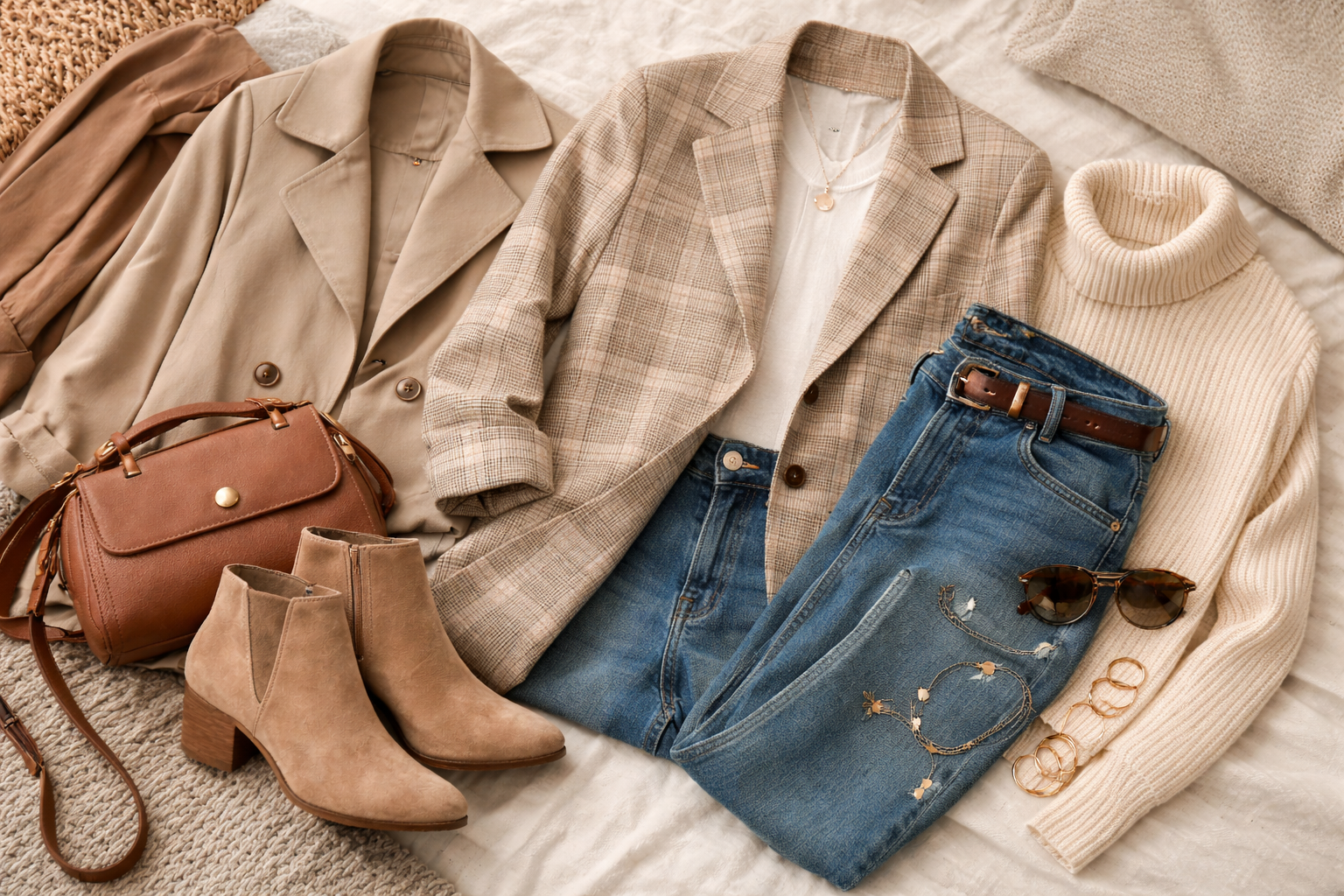
- Knit + denim + statement shoe
- Dress + belt + jacket
Once you know a formula works for your body and lifestyle, you can plug different pieces into it instantly creating more outfits.
This is especially useful on busy days when decision fatigue kicks in.
Shift #4: Use Color Intentionally (Not Perfectly)
You don’t need a strict color system to unlock more combinations.
Start simple:
- Choose one neutral base (black, navy, beige, grey)
- Add one color or texture
- Repeat colors across different categories (tops, shoes, layers)
Most people already own colors that work together, they just haven’t paired them yet.
Shift #5: Plan Outfits Before You Need Them
Outfits created under time pressure are almost always the same ones.
When you:
- Plan outfits ahead of time
- Save combinations you like
- Revisit outfits that worked
You remove stress and increase variety.
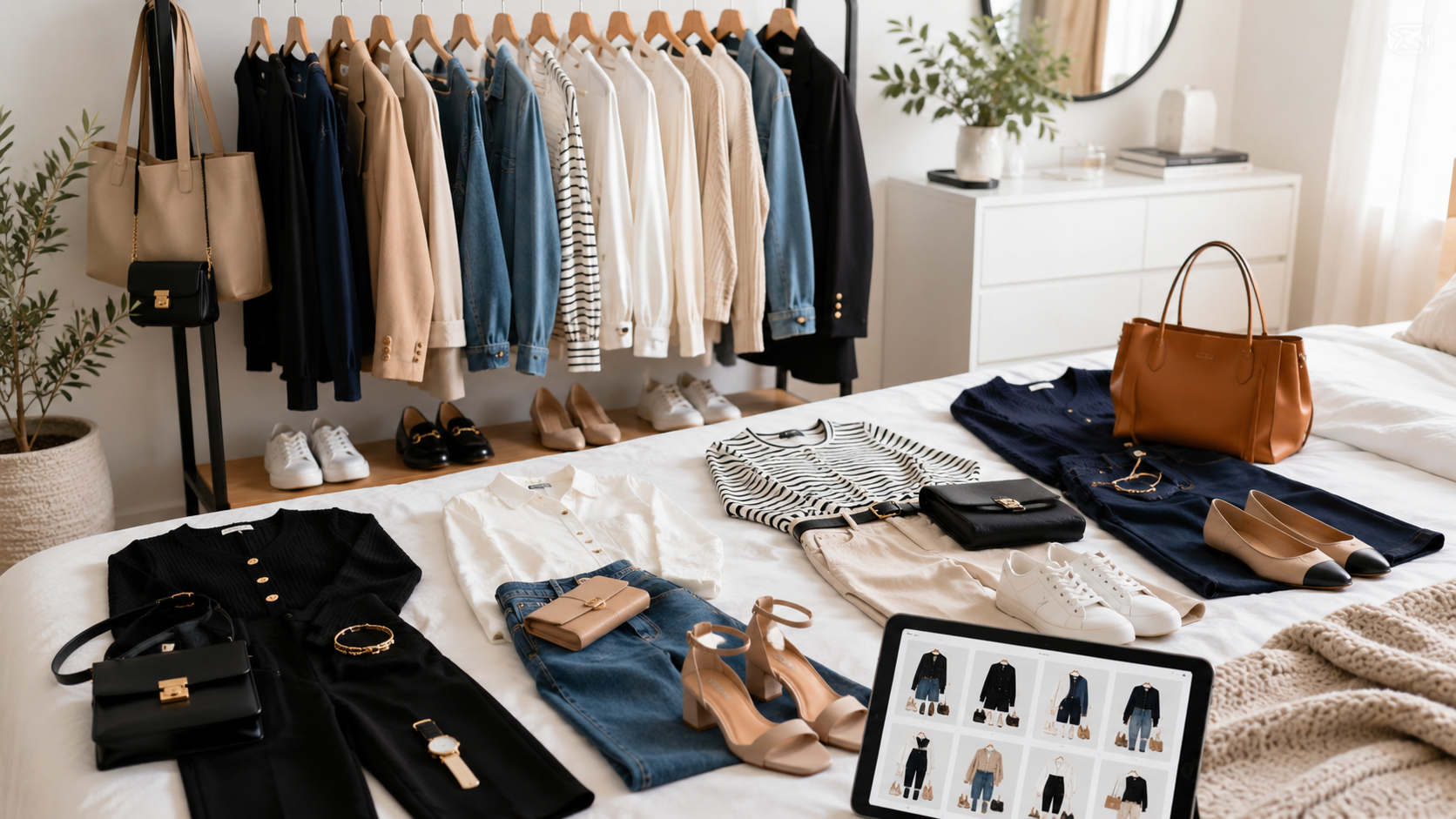
This is where digital wardrobe tools and outfit generators make a big difference: they help you see combinations you wouldn’t think of on your own.
Shift #6: Separate “Good Pieces” From “Useful Pieces”
A common mistake is keeping clothes because they’re objectively nice, even if they’re hard to style.
Useful pieces:
- Work with multiple items
- Fit your current lifestyle
- Feel easy to wear
Good pieces that aren’t useful limit outfit creation. Once you identify them, you can decide whether to style them differently, alter them, or let them go.
Shift #7: Repeat Outfits (Just Not the Same Way)
Outfit repetition isn’t the enemy, boring repetition is.
Repeating outfits with small tweaks:
- Different shoes
- Different outer layer
- Different styling energy
is how stylish wardrobes actually function.
The goal isn’t endless novelty. It’s flexibility.
The Real Key: Visibility Changes Everything
Most people already own enough clothes to create more outfits.
They just can’t see them.
When your wardrobe is visible, searchable, and organized by combinations, not just items, you unlock value you didn’t know was there.
That’s how:
- Fewer clothes feel like more
- Getting dressed gets easier
- Shopping becomes more intentional
Your wardrobe doesn’t need more pieces.
It needs better connections.
Want Help Seeing New Combinations?
OpenWardrobe helps you visualize outfits from the clothes you already own so you can wear more of what’s in your closet, without buying more.
Frequently Asked Questions About Making More Outfits
How can I make more outfits without buying new clothes?
You can make more outfits by focusing on new combinations instead of new pieces. Swapping one element at a time such as shoes, layers, or styling, can turn a single outfit into several. Planning outfits in advance and reusing outfit formulas also increases variety without shopping.
Why do I only wear a small portion of my wardrobe?
Most people wear only 20–30% of their clothes because they rely on habit and familiar pairings. The rest of the wardrobe often goes unworn simply because it’s harder to visualize new combinations, not because the clothes are wrong or outdated.
What’s the easiest way to create more outfit combinations?
The easiest way is to start with one anchor piece, like a jacket, trousers, or shoes, and build multiple outfits around it. This helps you see how one item can work across different looks, occasions, and levels of formality.
Do outfit formulas actually work?
Yes. Outfit formulas create structure and reduce decision fatigue. Once you find a formula that works for your body and lifestyle, you can reuse it with different pieces, making it easier to create multiple outfits quickly.
How does planning outfits ahead of time help?
Planning outfits in advance removes time pressure and helps you move beyond default looks. When you save or plan outfits ahead, you’re more likely to wear a wider range of your wardrobe and repeat outfits in more intentional ways.
Can color really help me get more outfits?
Yes. Using color intentionally helps expand combinations. Choosing a neutral base and adding one color or texture makes it easier to mix pieces that already work together, even if you don’t follow a strict color system.
Is repeating outfits a bad thing?
No. Repeating outfits is normal and practical. Changing one or two elements, like shoes, layers, or styling, keeps outfits feeling fresh while making the most of what you already own.
How do digital wardrobe tools help with outfit creation?
Digital wardrobe tools help you see all your clothes in one place and visualize combinations you might not think of on your own. Outfit generators and saved looks make it easier to create, repeat, and refine outfits over time.