.svg)

If your closet is full but you still feel like you have “nothing to wear,” the problem usually isn’t your style.
It’s your system.
Most unworn purchases happen for the same reasons:
- the item doesn’t integrate with what you already own
- it doesn’t match your real life (weather, schedule, dress code)
- it looked good in theory but fails the “Tuesday test”
- you bought the dopamine, not the outfit
Here’s a repeatable, no-regret method that helps you shop intentionally, using two practical tools:
- Cost-per-wear (what it actually costs each time you wear it)
- Closet gaps (what your wardrobe is missing that would unlock more outfits)
The No-Regret Shopping System (6 steps)
Step 1. Start with your real wardrobe goals (not aspirational you)
Answer these in one minute:
- What do I need outfits for in the next 30 days? (work, weekends, travel, events)
- What’s the biggest friction point? (shoes, layers, tops, fit, color, “nothing feels like me”)
- How do I want to feel in my clothes? (sharp, relaxed, creative, confident)
This keeps you from buying for a fantasy calendar.
Step 2. Identify your “high-rotation outfit formulas”
Before you buy anything, define 3–5 outfit formulas you wear on repeat (or want to wear on repeat). Examples:
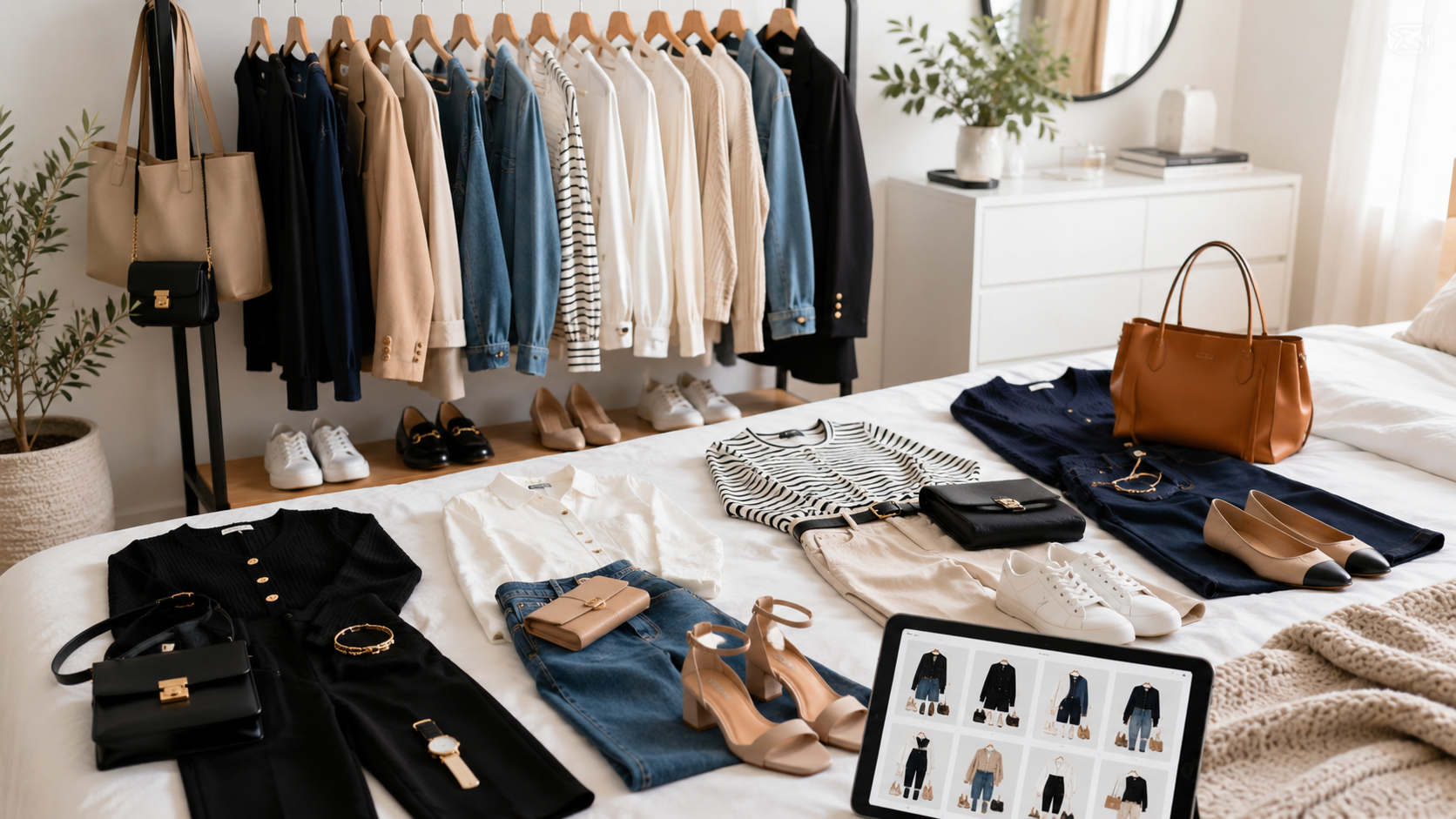
- knit + trouser + loafer
- tee + jeans + blazer
- dress + layer + boot
These formulas create “slots” (top/bottom/layer/shoe). Shopping becomes: fill a slot, not “grab something cute.”
Step 3. Find your closet gaps (the difference between a gap and a craving)
A closet gap is a missing piece that would let you wear multiple things you already own.
A craving is a new item that creates more items you “need” to make it work.
Quick “Gap or Craving?” test
It’s a gap if:
- it completes at least 3 outfits with items you already own
- it supports your existing outfit formulas
- it solves a repeat problem (e.g., “I have no shoes that work for winter + work”)
It’s a craving if:
- it only works with one specific look
- it requires new shoes/bag/top to function
- it’s mainly exciting because it’s new
Make a short gap list (max 5).
Examples of high-impact gaps:
- “a layer that makes casual look polished” (blazer, structured jacket)
- “shoes that work with 80% of my outfits”
- “tops that work with my best bottoms”
- “a winter-friendly version of my favorite outfit”
Step 4. Run the Cost-Per-Wear check (your mini “calculator”)
Cost-per-wear is simple:
Cost per wear = Total cost ÷ Expected number of wears
Total cost is the price you paid for the item plus extras that can include tailoring, shipping, or cleaning if relevant.
Mini calculator examples (realistic, not perfectionist)
- Jeans: $120 worn 2x/week for a year
- Expected wears: 2 × 52 = 104
- Cost-per-wear: $120 ÷ 104 = $1.15 per wear
- Blazer: $180 worn 1x/week for 2 years
- Expected wears: 1 × 52 × 2 = 104
- Cost-per-wear: $180 ÷ 104 = $1.73 per wear
- Trend top: $60 worn 3 times
- Cost-per-wear: $60 ÷ 3 = $20.00 per wear
This doesn’t mean you can’t buy a “$20 per wear” piece. It means you should know what you’re doing and choose it intentionally.
A simple CPW guideline (useful, not rigid)
- Under $3/wear: excellent for most everyday items
- $3–$10/wear: fine if it supports your real life and you love it
- $10+/wear: treat as an occasion piece (and buy on purpose)
Step 5. Use the “Buy or Not” decision tool (no more guesswork)
Before you checkout, run this decision sequence (this is exactly what our Buy or Not tool is designed to help with):
The 7-question “Buy or Not” checklist
- Can I name 3 outfits with what I already own?
- Does it fit at least one of my outfit formulas?
- Do I have the right shoes to wear it tomorrow?
- Will I wear it at least 20 times in the next year? (or can I justify fewer?)
- Is the fit truly right or am I hoping it will “work somehow”?
- Does it match how I want to feel in my clothes?
- If this disappeared, would I try to buy it again?
If you’re getting “no” on multiple questions, it’s usually a pass.
Step 6. Make your purchases “integration-proof”
Most clothes go unworn because they never get integrated.
Do this within 10 minutes of buying (or receiving) the item:
- Build 3 outfits immediately
- Choose one day you’ll wear it in the next week
- If it needs tailoring, schedule it (don’t let it become a closet ghost)
If it doesn’t integrate, consider reselling early while it still holds value.
How to stop impulse shopping (without relying on willpower)
Use the 48-hour pause (especially for “fun” purchases)
If it’s not filling a clear closet gap, wait 48 hours.
- If you still want it and it passes the checklist, you’ll buy it with confidence.
- If the craving fades, you just saved money and closet space.
Keep a “Gap List” note in your phone
When you feel the urge to shop, open the note:
- “What I actually need”
- “What outfits I’m trying to unlock”
This re-routes the impulse into a plan.
Make returns part of the system (not a moral failure)
If it doesn’t fit, doesn’t feel like you, or doesn’t integrate: return it. Fast.
Common closet gaps (and what to do instead of buying random items)
- “I need outfits, not clothes.” → focus on shoes + layers (highest leverage)
- “Nothing feels polished.” → one structured layer + better shoes beats 5 new tops
- “Everything is ‘fine’ but not me.” → you may need clarity on colors + silhouettes (hello, Style Blueprint)
- “I don’t like how things fit.” → tailoring/repairs can outperform shopping
Where Style Blueprint fits (and why it prevents regret)
A huge chunk of unworn purchases happen because people are guessing:
- guessing which colors flatter them
- guessing which silhouettes work
- guessing what “their style” even is
Style Blueprint removes the guesswork by giving you:
- your best colors (and how to wear them)
- your body shape + proportions decoded
- your style personality + brand matches
So when you do shop, you’re shopping with direction, and your closet gets easier, not bigger.
FAQs
How do I shop intentionally when I love trends?
Treat trends like accessories: small, removable, easy to pair. Or set a rule: trends must work with 3 existing outfits and pass your CPW estimate.
What if I can’t predict how much I’ll wear something?
Start with a conservative estimate. If you can’t confidently name when you’ll wear it, that’s information.
Is cost-per-wear the only thing that matters?
No. Fit, comfort, confidence, and lifestyle matter too. CPW is just a reality check that helps you prioritize.
What’s the fastest way to stop buying clothes you don’t wear?
Use these three rules:
- 48-hour pause
- 3-outfit test
- Buy to fill a closet gap, not a mood
Your next step
If you want to make this system frictionless:
- Use the Buy or Not tool before purchases.
- Build 3 outfit formulas you actually wear.
- Keep a gap list of five items max.
And if you want your “best colors + best silhouettes” locked in so shopping gets dramatically easier, Style Blueprint is the shortcut.