.svg)

Most closets are organized by category.
All the shirts together.
All the pants together.
All the jackets together.
It looks tidy.
But it doesn’t make getting dressed any easier.
If you’ve ever stood in front of a perfectly organized closet and still thought, “I have nothing to wear,” this is why.
Today, we’re flipping the system.
Instead of organizing your wardrobe by category, we’re going to organize it by outfit.
And yes, this simplifies everything.
Why Organizing by Category Doesn’t Actually Work
Traditional closet organization focuses on storage logic, not dressing logic.
It asks:
- Where does this item belong?
- What type of garment is it?
But getting dressed requires a different question:
- What works together?
When your clothes are separated by type, your brain has to do all the matching work every single morning. That decision fatigue adds up.
Organizing your wardrobe by outfit reduces friction. It turns your closet into a menu instead of a puzzle.
What It Means to Organize a Wardrobe by Outfit
Organizing by outfit means grouping pieces based on how you actually wear them, not what they are.
Instead of:
- All blazers in one place
You create:
- Blazer + trousers + shirt combinations that already work
You’re building ready-made visual systems.
Think of it as pre-deciding your best combinations so you don’t have to reinvent the wheel daily.
Step 1: Identify Your Core Outfit Formulas
Before you move anything physically, identify the formulas you actually wear.
For example:
- Trousers + knit + structured jacket
- Jeans + button-down + loafers
- Dress + boots + long coat
- Wide-leg pants + fitted top + sneakers
Most people rotate 3–5 formulas repeatedly.
Look at your past outfits (or your wardrobe data, if you track wear frequency). What combinations show up again and again?
Those are your anchors.
Step 2: Create Outfit Clusters
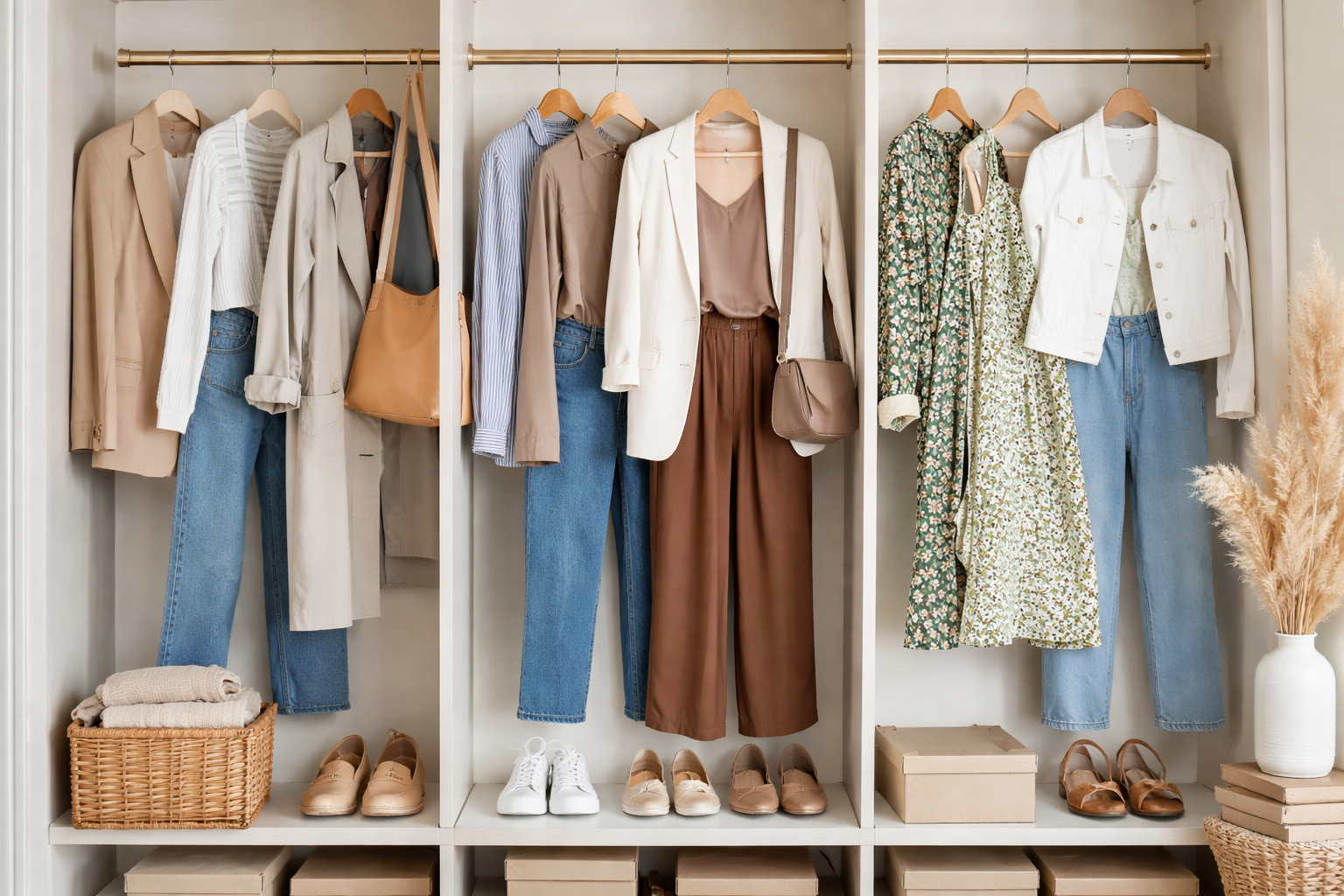
Now, build small “clusters” of clothing that work together.
Each cluster should include:
- 1–3 tops
- 1 bottom
- 1 -2 layering pieces
- 1-2 shoe option
Physically hang these near each other in your closet. This becomes a micro capsule.
If space allows:
- Use matching hangers to visually group them.
- Use dividers.
- Or simply keep outfit pieces side by side.
The goal is that when you grab one item, the others are right there.
No scavenger hunt required.
Step 3: Build a “High-Frequency” Zone
Not all clothes deserve equal real estate.
Move your most-worn outfit clusters to:
- Eye level
- Center rack space
- Easiest access drawer
Your low-frequency items (formalwear, seasonal pieces, occasion-specific items) can live elsewhere.
This aligns your closet with your real life.
Step 4: Rotate Seasonally Without Reorganizing Everything
When transitioning into a different season, don’t dismantle your system.
Instead, when transitioning into spring, for example:
- Swap heavy fabrics for lighter ones within the same outfit clusters.
- Replace boots with loafers or sneakers
- Shift color weight from dark neutrals to lighter tones.
You’re updating existing formulas, not starting from scratch.
That’s the difference between chaos and strategy.
Step 5: Keep a “Wildcard” Section
You don’t want your wardrobe to feel rigid.
Designate a small area for:
- New purchases
- Statement pieces
- Experimental combinations
This prevents the system from feeling stale while keeping 80% of your closet functional and predictable.
The Real Benefit: Less Decision Fatigue
Organizing your wardrobe by outfit:
- Reduces morning stress
- Increases outfit repetition (in a good way)
- Makes it easier to see gaps
- Prevents unnecessary shopping
- Helps you wear more of what you already own
And here’s the secret: when your wardrobe is organized around how you actually live, it naturally becomes more sustainable.
Not because you forced it.
Because it works.
Common Mistakes to Avoid
1. Creating too many outfit clusters.
If everything is a “go-to,” nothing is.
2. Organizing aspirational outfits.
If you haven’t worn it in a year, don’t give it prime space.
3. Ignoring fit issues.
If something doesn’t fit properly, it won’t magically start working in a cluster.
4. Overcomplicating the system.
This should simplify your life, not become a Pinterest project.
Digital Wardrobes Make This Even Easier
If you use a digital wardrobe platform, organizing by outfit becomes dramatically easier.
You can:
- Track which combinations you actually wear
- Identify high-performing pieces
- Spot underutilized items
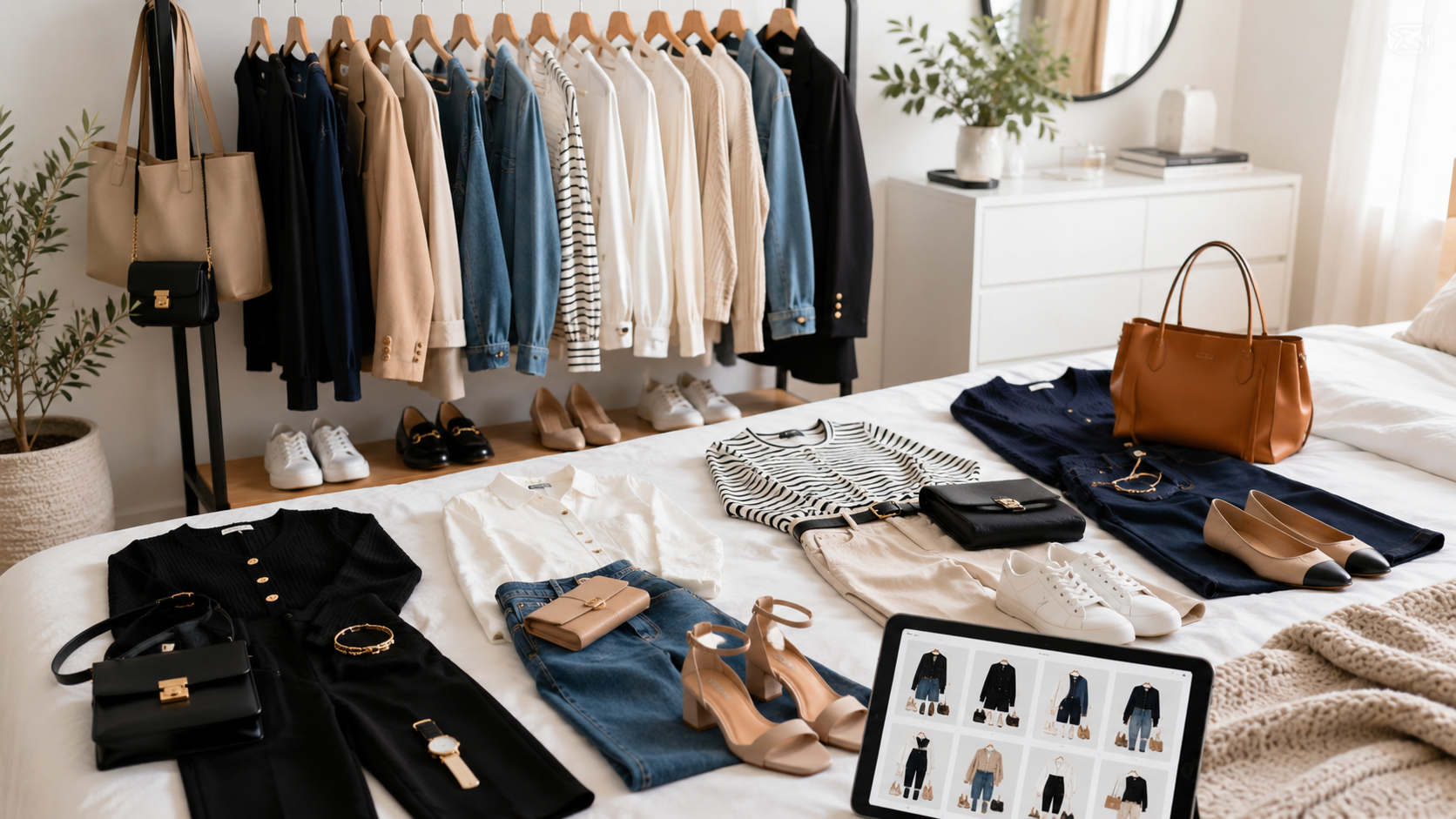
- Build outfit grids without physically moving anything
It turns guesswork into data.
And data is very good at reducing regret.
FAQs: Organizing Your Wardrobe by Outfit
Is it better to organize clothes by color or by outfit?
Organizing by color is visually pleasing but not necessarily functional. Organizing by outfit makes getting dressed faster and reduces decision fatigue because combinations are pre-built.
How many outfit combinations should I create?
Start with 5–10 reliable outfit clusters for your weekly routine. You can expand later, but focus on frequency first.
What if I have a small closet?
Even in a small closet, you can:
- Hang outfit pieces side by side
- Use clip hangers to group items
- Photograph combinations digitally
- Dedicate one section to ready-made outfits
The system works regardless of size.
Does organizing by outfit work for workwear?
Yes, especially for workwear. Most professionals rotate a few core formulas. Grouping these combinations reduces morning stress and ensures consistency.
How do I organize seasonal clothing using this method?
Keep your outfit structure the same. Swap fabrics and footwear as seasons change rather than reorganizing by garment type.
Will this stop me from buying new clothes?
It won’t eliminate shopping, but it will make gaps obvious. When you see which outfits lack versatility, you’ll shop with intention rather than impulse.
The Bottom Line
A well-organized wardrobe isn’t about neat stacks.
It’s about frictionless dressing.
When your closet reflects outfits instead of categories, you spend less time thinking and more time living.
And that’s the kind of organization that actually sticks.