.svg)


Fall shopping has a very persuasive personality.
The sweaters arrive. The boots appear. The jackets start looking serious. Suddenly every email subject line is whispering, “new season, new you,” as if the current you is not already doing her best with a tote bag, a calendar, and three unfinished beverages.
And yes, fall clothes are good. A great coat, a useful pair of trousers, the right knit, or a comfortable pair of loafers can genuinely make getting dressed easier.
But fall shopping can also be sneaky.
You buy one sweater because it feels like the season is changing. Then a jacket because the sweater needs a jacket friend. Then boots because the jacket has opinions. Then you realize you have spent money, added more clothes, and still do not have the outfits you need for work, errands, dinners, school drop-off, travel, or actual weather.
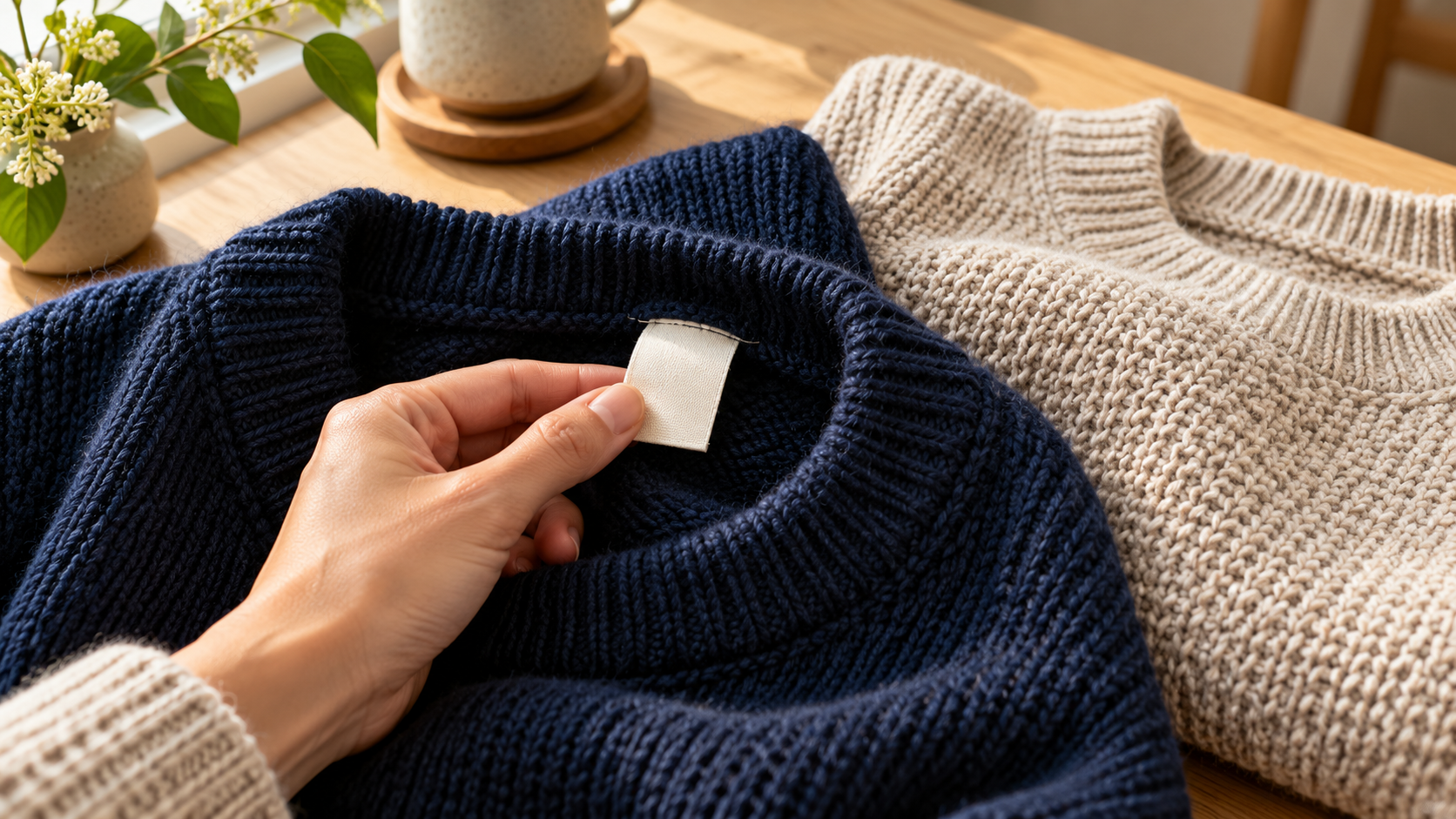
Before buying new-season clothes, use a filter.
Not to make shopping joyless. Absolutely not. We are not here to remove beauty from your life. We are here to stop you from buying clothes that look exciting online and then immediately become decorative fabric in your closet.
Here are seven questions to ask before buying fall clothes.
Quick answer: before buying fall clothes, ask whether the item works with your real wardrobe, real routine, and real weather
Before you buy any new-season clothing, ask:
- Does this fit my actual life this fall?
- Can I make at least three outfits with it right now?
- Do I already own something that does the same job?
- Is this a real wardrobe gap or just a seasonal mood?
- Will I wear this in my real climate?
- Does the fit, fabric, and care level work for me?
- Would I still want this if it were not new, trending, or on sale?
If the answer is mostly yes, the item may be worth buying.
If the answer is mostly no, pause. You may not need the item. You may need a better outfit plan.
Why fall shopping feels so tempting
Fall is the season of wardrobe optimism.
After months of heat, sandals, linen, shorts, and “what can I wear that won’t make me overheat by 11 a.m.,” fall clothes feel like structure. They feel like polish. They feel like the wardrobe equivalent of buying a fresh notebook.
A new jacket can feel like competence. A sweater can feel like emotional support. Boots can feel like a plan.
But shopping from seasonal excitement can lead to mistakes.
Common fall shopping mistakes include:
- Buying heavy clothes before the weather is actually cool
- Buying trend pieces that do not match your real wardrobe
- Buying duplicates of items you already own
- Buying “fantasy fall” clothes for a life you do not live
- Buying sale items because they feel like a deal
- Buying one piece that requires three more purchases to work
- Buying clothes for your aspirational routine instead of your actual routine
The goal is not to avoid shopping. The goal is to shop with enough clarity that your new clothes actually help.
What is a fall shopping filter?
A fall shopping filter is a quick decision system that helps you decide whether a new item deserves a place in your wardrobe.
It is not about being strict, minimalist, or never buying anything fun. It is about asking better questions before you spend money.
A good shopping filter helps you avoid:
- Closet clutter
- Impulse purchases
- Duplicate basics
- Unworn trend pieces
- Items that do not fit your lifestyle
- Clothes that are too hard to care for
- Pieces that only work in imaginary outfits
Think of it as a tiny personal stylist living between you and the checkout button.
She is not mean. She just wants to know why you need another striped sweater.
Question 1: Does this fit my actual life this fall?
Start here.
Before buying anything, ask what your real fall routine looks like.
Are you going to an office? Working from home? Traveling? Walking a lot? Driving everywhere? Going to school events? Taking care of kids? Going to dinners? Attending weddings? Spending most days in casual clothes? Dressing for meetings? Living somewhere that stays warm until October?
Your wardrobe should support your real calendar.
Ask:
- Where would I wear this?
- How often would I wear it?
- Does it match my weekly routine?
- Is it right for my work, weekends, and social life?
- Am I buying for my real life or a lifestyle I admire?
A wool blazer may be beautiful, but if you work from home in a warm climate and rarely need structured outfits, it may not be your first priority.
A polished pair of flats, lightweight trousers, or a better tee might do more for your actual life.
Good reason to buy
“I need a lightweight jacket I can wear to work, dinner, and errands because mornings are cool and afternoons are still warm.”
Suspicious reason to buy
“I saw someone wear this in Copenhagen and now I believe I need an oversized wool coat, even though I live somewhere that considers 68 degrees a cold front.”
No judgment. Just questions.
Question 2: Can I make at least three outfits with it right now?
This is the most useful fall shopping question.
Before buying a new item, imagine three complete outfits you can make with clothes you already own.
Not theoretical outfits. Real outfits.
A complete outfit includes:
- Top
- Bottom or dress
- Layer
- Shoes
- Bag
- Accessories if needed
- Weather reality check
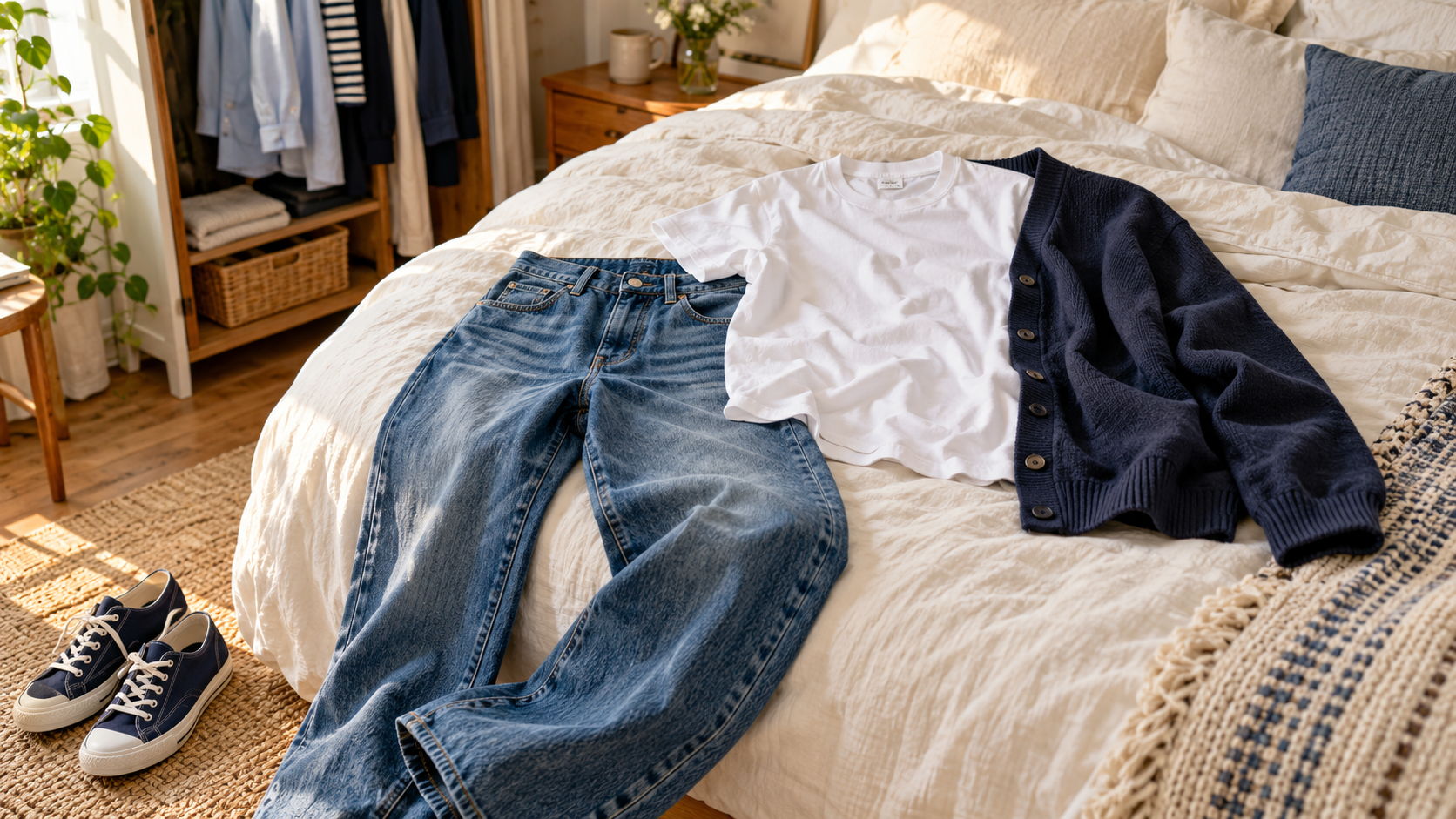
For example, if you want to buy a chocolate brown cardigan, can you wear it with:
- White jeans + black tank + loafers
- Slip skirt + tee + ballet flats
- Straight-leg denim + white shirt + brown boots
If yes, good. That cardigan is already connected to your wardrobe.
If no, pause.
An item that requires multiple new purchases to work is not one purchase. It is a group project.
And group projects, as we know, have consequences.
Use the three-outfit rule
Before buying, ask:
- Can I style this casually?
- Can I style this more polished?
- Can I wear it with at least two bottoms or two tops I already own?
- Do I already have shoes that work with it?
- Does it fit my color palette?
If you cannot make three outfits, the item may still be worth buying, but you should know why.
Maybe it is for a specific event. Maybe it fills a very clear gap. Maybe it replaces something worn out. That is fine.
But do not let a “great piece” sneak in without a job.
Question 3: Do I already own something that does the same job?
Fall shopping often creates duplicates because the season’s pieces feel fresh even when they are not actually different from what you own.
Before buying, check whether you already own something similar.
Ask:
- Do I already have this color?
- Do I already have this silhouette?
- Do I already have this fabric?
- Do I already have this occasion covered?
- Is this meaningfully different from what I own?
- Is this replacing something or simply joining a crowded category?
For example:
- Another black sweater when you already own five
- Another pair of straight-leg jeans when you do not wear the three you have
- Another beige trench when your current trench is perfectly good
- Another white button-down when the issue is that none of your white shirts fit well
- Another pair of boots when what you really need is a comfortable flat
Duplicates are not always bad. Sometimes you wear something so often that a backup makes sense. But accidental duplicates are wardrobe clutter in a charming outfit.
When a duplicate is worth buying
A similar item may be worth buying if:
- You wear the current version constantly
- The old one is worn out
- The new one fits better
- It solves a real comfort issue
- It works with more outfits
- It replaces, rather than adds to, a weak item
When a duplicate is not worth buying
Skip it if:
- You barely wear the version you already own
- You are buying it because it is on sale
- You are hoping this one will magically fix the same styling issue
- You cannot explain how it is different
- It would compete with pieces you already ignore
If the category is crowded, shop your closet first.
Question 4: Is this a real wardrobe gap or just a seasonal mood?
This question is where fall shopping gets interesting.
A real wardrobe gap is an item that would make multiple outfits easier.
A seasonal mood is the sudden belief that your entire personality depends on a suede jacket.
Both can be valid. Only one should control your budget.
Signs it is a real wardrobe gap
It may be a real gap if:
- You keep getting dressed and wishing you had it
- It completes several outfits
- It fits your routine
- It works with your climate
- You have tried styling around the gap and still need it
- It replaces something missing, worn out, or no longer fitting
- You can name exactly when you would wear it
Examples:
- Comfortable loafers for work and errands
- A lightweight jacket for cool mornings
- A pair of trousers that fits your current body
- A cardigan that works over dresses
- A crossbody bag for busy days
- A non-sheer white tee
- A belt that makes your pants and dresses work better
Signs it is a seasonal mood
It may be a mood if:
- You only want it because it is everywhere
- You cannot name where you would wear it
- It does not work with your shoes, bags, or layers
- It feels exciting but not useful
- It belongs to a fantasy version of fall
- You would not want it at full price
- You need to buy other pieces to make it work
Examples:
- A dramatic coat in a climate where coats are barely needed
- A trend color that goes with nothing you own
- A skirt that requires shoes you do not have
- A sweater that is too warm for your weather
- A bag that looks beautiful but does not hold your actual life
Seasonal moods are not evil. They are just not always shopping instructions.
Question 5: Will I wear this in my real climate?
This one is practical and frequently ignored.
Fall looks different depending on where you live. A fall wardrobe in New York is not the same as a fall wardrobe in Los Angeles, Austin, Miami, Seattle, Chicago, London, or San Francisco.
Before buying fall clothes, ask whether the item works for your actual weather.
Ask:
- Is fall actually cool where I live?
- How many weeks can I wear this?
- Is this too heavy for my climate?
- Is this warm enough for my climate?
- Can I layer it?
- Does it work for rain, wind, humidity, or temperature swings?
- Will I wear this before November?
If your September and October are still warm, prioritize transitional pieces:
- Lightweight jackets
- Cotton cardigans
- Button-down shirts
- Loafers
- Ballet flats
- Light denim
- Linen-blend trousers
- Thin knits
- Midi skirts
- Dresses that can be layered
- Lightweight blazers
If your fall gets cold quickly, prioritize:
- Warm layers
- Coats
- Boots
- Wool or cashmere knits
- Socks and tights
- Weatherproof shoes
- Heavier trousers
- Scarves
- Practical outerwear
Do not buy for a generic fall. Buy for your fall.
The internet may be wearing wool coats. Your weather app may be laughing.
Question 6: Does the fit, fabric, and care level work for me?
A garment can be beautiful and still wrong for your life.
Before buying, check the practical details.
Fit
Ask:
- Can I sit comfortably?
- Can I walk normally?
- Does it pull, pinch, gap, ride up, or slide around?
- Does it work with my current body?
- Would tailoring make it better?
- Am I buying a size that fits now or a size that requires a negotiation with reality?
Your clothes should fit your body. Not your imagined future body. Not your “after a very disciplined month” body. Your body now.
Fabric
Ask:
- Does the fabric feel good on my skin?
- Does it wrinkle in a way I can live with?
- Is it too sheer?
- Does it attract lint or pet hair?
- Is it breathable?
- Does it stretch out?
- Does it feel durable enough for the price?
Fabric is not a small detail. Fabric determines whether you reach for the item or avoid it with vague resentment.
Care
Ask:
- Is it machine washable?
- Does it require dry cleaning?
- Will I actually steam or iron it?
- Does it need special storage?
- Is it delicate?
- Can it survive my real life?
If you hate dry cleaning, do not build a wardrobe around dry-clean-only pieces and then act surprised when they form a tiny expensive museum in your closet.
Buy for the level of maintenance you will actually do.
Question 7: Would I still want this if it were not new, trending, or on sale?
This is the truth question.
Fall shopping gets especially dangerous because newness feels powerful. A new item can feel like a shortcut to a new routine, better mornings, polished outfits, and a version of you who meal-preps without becoming bitter.
But newness wears off.
Before buying, remove the marketing magic.
Ask:
- Would I want this if it were not on sale?
- Would I want this if no one else were wearing it?
- Would I want this if it were from a less exciting brand?
- Would I still like it next month?
- Would I buy it if I had to wear it this week?
- Would I choose it over something else on my wishlist?
- Would I be happy to see it in my wardrobe a year from now?
If the answer is no, it may be the sale, trend, or new-season energy talking.
And listen. Sale goggles are real. They make mediocre things look like destiny.
Take a breath. Close the tab if needed. No cardigan has ever needed an immediate emotional commitment.
The fall shopping filter checklist
Before buying new-season clothes, run the item through this checklist:
- It fits my actual fall routine
- I can make at least three outfits with it
- It is not an unnecessary duplicate
- It fills a real wardrobe gap
- It works for my real climate
- The fit, fabric, and care level work for me
- I would still want it if it were not new, trending, or on sale
If you check all seven, it is probably a thoughtful buy.
If you check four or five, pause and test it with more outfits.
If you check three or fewer, do not buy it yet. Put it on a wishlist and revisit it in a few days.
A little delay is one of the best impulse-shopping filters. If you still want it later and it still makes sense, it will feel calmer and clearer.
What to do before buying fall clothes
Before you shop, do these three things.
1. Build outfits from what you own
Create at least five to ten outfits using your current wardrobe. This shows you what is actually missing.
Try building:
- Work outfits
- Errand outfits
- Dinner outfits
- Transitional weather outfits
- Busy-day outfits
- Confidence outfits
If you cannot build outfits with what you own, identify why.
Is it shoes? Layers? Fit? Color? Missing basics? Too many statement pieces? Not enough comfortable bottoms?
That answer is your shopping list.
2. Check your most-worn pieces
Your most-worn clothes tell you what your real style is doing.
Look for patterns:
- Colors you repeat
- Fabrics you like
- Shoes you actually wear
- Silhouettes that make you feel good
- Pieces you avoid
- Items that work across multiple occasions
If you wear straight-leg jeans constantly, a better pair may be useful. If you never wear skirts, maybe do not buy a skirt just because fall fashion said skirts are “back.” Skirts have been back many times. They are fine. They can wait.
3. Make a short, specific shopping list
A useful shopping list sounds like this:
- Brown loafers to wear with trousers, jeans, and skirts
- Lightweight navy cardigan for dresses and office AC
- Non-sheer white tee
- Straight-leg dark denim, full length
- Black belt with simple hardware
- Lightweight jacket for warm fall weather
A vague shopping list sounds like this:
- Fall tops
- Better basics
- Cute jacket
- Something for work
- More polished pieces
Vague lists create vague purchases. Specific lists create outfits.
Smart fall wardrobe buys that often earn their place
Not everyone needs the same fall clothes, but some pieces are especially useful because they connect outfits.
Consider these only if they fit your routine and pass the filter.
Lightweight jacket
A denim jacket, utility jacket, cropped jacket, or lightweight trench can make summer pieces work into fall.
Cardigan
A good cardigan can work over dresses, tanks, tees, and button-downs. Choose one that feels like your style, not like you are borrowing warmth from someone else’s office chair.
Loafers or ballet flats
These can make outfits feel more fall-ready before boot weather arrives.
Straight-leg or wide-leg jeans
Useful if they fit well, feel comfortable, and work with your shoes.
Trousers
A good pair of trousers can support work, dinners, travel, and polished casual outfits.
Belt
A belt can unlock outfits you already own: dresses, trousers, jeans, skirts, and oversized shirts.
Better tee or tank
Sometimes the missing piece is not exciting. Sometimes it is a non-sheer tee that does not twist, cling, or give up after two washes.
Structured bag
A practical, polished bag can make casual outfits look more intentional.
Useful does not have to mean boring. It means the item earns its space.
Fall shopping examples: buy or pause?
Example 1: The oversized blazer
You want an oversized blazer in charcoal gray.
Ask the filter:
- Does it fit your routine? Yes, you need work and dinner outfits.
- Can you make three outfits? Yes: jeans, trousers, slip skirt.
- Duplicate? No.
- Real gap? Yes, you need a structured layer.
- Climate? Yes, lightweight wool works where you live.
- Fit and care? Yes, comfortable and manageable.
- Still want it if not trending? Yes.
Verdict: likely a good buy.
Example 2: The chunky cream sweater
You want a chunky cream sweater because it looks cozy and perfect.
Ask the filter:
- Routine? Maybe.
- Three outfits? One, maybe two.
- Duplicate? You already own two cream sweaters.
- Real gap? Not really.
- Climate? Your fall stays warm until November.
- Care? Dry clean only.
- Still want it if not on sale? No.
Verdict: pause.
You may love the idea of the sweater more than the reality of wearing it.
Example 3: The brown loafers
You want brown loafers.
Ask the filter:
- Routine? Yes, work, errands, dinners.
- Three outfits? Yes: jeans, trousers, skirts, dresses.
- Duplicate? No.
- Real gap? Yes, transitional shoes.
- Climate? Yes.
- Fit and care? Comfortable leather.
- Still want if not trending? Yes.
Verdict: strong buy.
This is a connector piece. Connector pieces are wardrobe gold.
Example 4: The statement red coat
You want a dramatic red coat.
Ask the filter:
- Routine? Rarely need coats.
- Three outfits? Maybe, but mostly special looks.
- Duplicate? No.
- Real gap? No, you own practical outerwear.
- Climate? Too warm most of fall.
- Fit and care? Fine.
- Still want if not trending? Maybe.
Verdict: wishlist, do not impulse buy.
It may be a fun statement piece, but it is not a priority unless you know you will wear it.
How to use OpenWardrobe before shopping for fall
OpenWardrobe can help you shop with evidence instead of vibes.
Before buying anything new, open your digital wardrobe and do this:
- Review your most-worn fall and transitional pieces.
- Build outfits with what you already own.
- Save five to ten outfits for your real routine.
- Notice which items show up again and again.
- Notice what is missing from multiple outfits.
- Check whether you already own something similar to what you want to buy.
- Create a shopping list based only on real gaps.
For example, if you build ten outfits and five would work better with brown loafers, that is useful. If you build ten outfits and none require the cropped suede jacket sitting in your cart, that is also useful. Painful, perhaps. But useful.
You can also use OpenWardrobe to track wears over time. If you buy something, you can see whether it actually becomes part of your wardrobe or quietly joins the “maybe someday” department.
The best shopping decisions come from knowing what you already own.
How to stop impulse buying fall clothes
Impulse buying often happens when shopping feels easier than styling.
If you feel the urge to buy, try this first:
- Save the item to a wishlist
- Wait 24 to 72 hours
- Build three outfits with it
- Check your wardrobe for similar items
- Ask what problem it solves
- Compare it to your actual shopping list
- Look at cost per wear
- Ask whether you would wear it this week
A pause does not ruin a good purchase. It protects you from a bad one.
If you still want the item after the pause, and it passes the filter, buy it with confidence.
If you forget about it completely, congratulations. You just saved money and closet space. Very elegant behavior.
Cost per wear: a useful reality check
Cost per wear is not the only way to decide whether something is worth buying, but it can help.
A $200 pair of shoes you wear 80 times has a cost per wear of $2.50.
A $40 top you wear once has a cost per wear of $40.
The cheaper item was not actually the better value.
When considering a purchase, ask:
- How many times will I realistically wear this?
- Is it durable enough to last?
- Does it work across multiple occasions?
- Will I still like it next season?
- Does it replace something lower quality?
A higher price can be reasonable if the item is useful, durable, and often worn. A low price is not a deal if the item sits unworn.
Your closet does not care what percentage off something was. Brutal, but fair.
What to avoid buying too early for fall
Depending on your climate, some pieces may be better to delay.
Heavy sweaters
If your fall is warm, wait until you can actually wear them.
Thick coats
Unless you live somewhere cold early, coats can wait.
Tall boots
Great in the right climate, but not always useful in early fall.
Trend colors that do not work with your wardrobe
A color can be beautiful and still useless to you.
Special occasion pieces with no occasion
Admire them. Wishlist them. Do not let them move in without a plan.
Sale items outside your list
A sale is not a gap. A sale is just math wearing lipstick.
FAQ: Fall shopping filter
What should I buy first for fall?
Buy the item that completes the most outfits. For many wardrobes, that might be transitional shoes, a lightweight jacket, a cardigan, trousers, a belt, or a better everyday bag.
How do I know if I need new fall clothes?
You may need new fall clothes if you cannot build outfits for your real routine with what you own, or if key items no longer fit, are worn out, or do not match your climate and lifestyle.
How many outfits should a new item work with?
Aim for at least three outfits using clothes you already own. If the item is expensive or meant to be a wardrobe staple, it should ideally work in more than three outfits.
How do I stop buying clothes I don’t wear?
Before buying, ask where you will wear the item, what outfits it completes, whether it duplicates something you own, and whether it fits your real routine. Save items to a wishlist before purchasing.
What is a real wardrobe gap?
A real wardrobe gap is an item that would make multiple outfits easier or more complete. It is different from wanting something because it is new, trending, or on sale.
Is it bad to buy trend pieces?
No. Trend pieces can be fun and useful if they fit your wardrobe, routine, climate, and budget. The problem is buying trends that do not connect to anything you already own.
Should I shop before or after organizing my closet?
Shop after. Even a quick wardrobe review can reveal what you already have, what you forgot about, and what you actually need.
Final thought: buy for the wardrobe you actually wear
Fall shopping should make your wardrobe easier, not louder.
Before buying new-season clothes, ask better questions. Look at your real routine. Build outfits from what you own. Check for duplicates. Name the actual gap. Think about your climate. Be honest about fit, fabric, and care. Step away from anything that only looks good because it is new, trending, or on sale.
This does not make shopping less fun.
It makes shopping more successful.
The best fall purchases are the ones that slide naturally into your wardrobe and immediately start helping. They complete outfits. They solve real problems. They make mornings easier. They feel like you.
Use the filter. Buy with clarity. Let the rest stay in the cart where it can think about what it has done.