.svg)

Getting dressed should not require a full morning committee meeting.
And yet, there you are: standing in front of your closet, towel on head, coffee somewhere unsafe, trying to remember if the pants you want are clean, if that shirt works with those shoes, and whether the outfit you wore last Tuesday was actually good or just good because you were running late.
This is why you need an outfit bank.
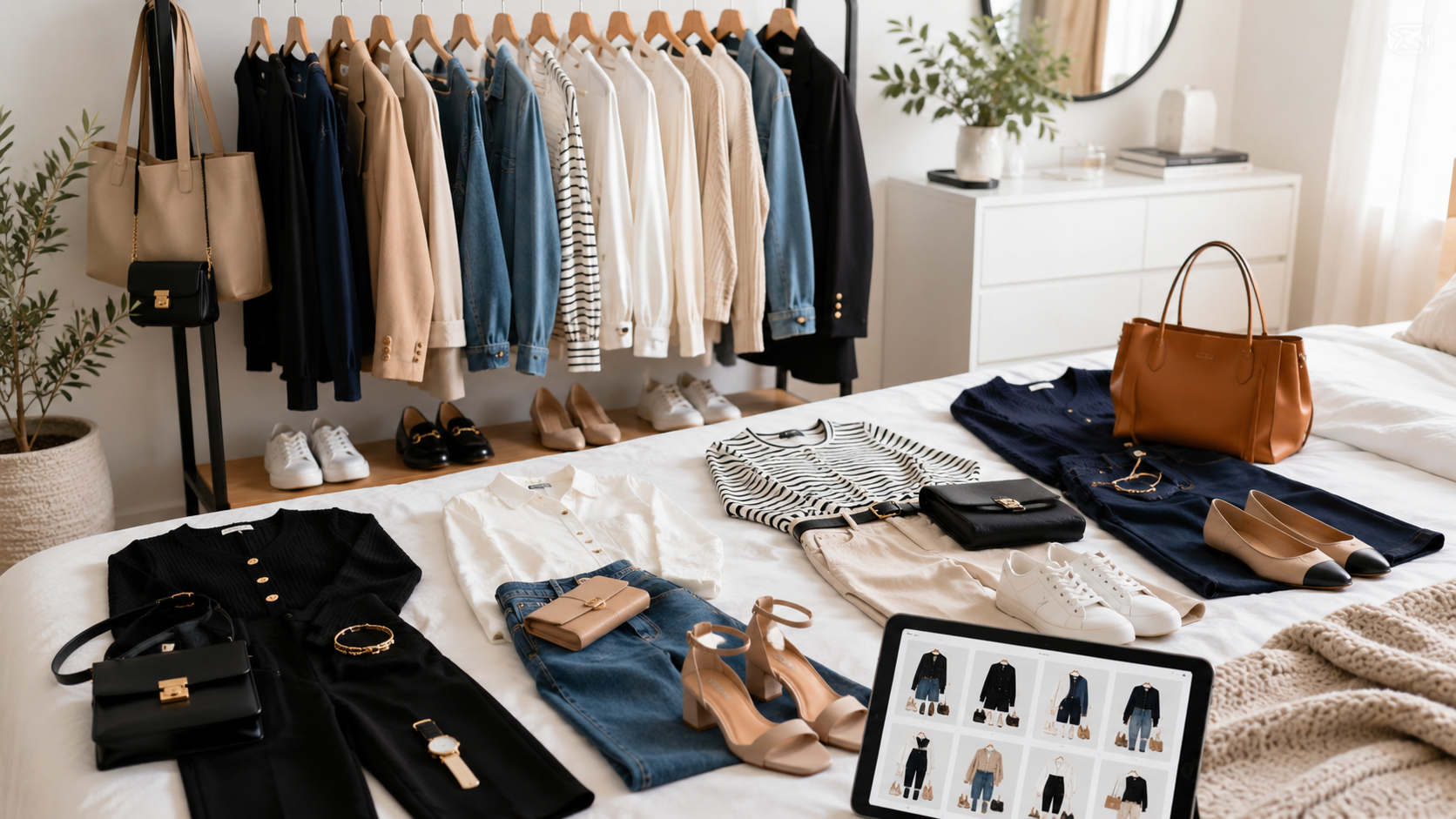
An outfit bank is exactly what it sounds like: a saved collection of outfits that already work, built from clothes you already own. It is not a capsule wardrobe, although it can help you build one. It is not a strict uniform, although it can make your style feel more consistent. It is not about dressing the same every day.
It is about removing the “what should I wear?” panic from days when you do not have time, energy, or emotional range for closet theater.
The method is simple: save 12 complete looks now so getting dressed is easier later.
Quick answer: an outfit bank is a saved set of go-to outfits for your real life
The Outfit Bank Method helps you get dressed faster by creating a small library of complete outfits before you need them.
Start with 12 looks:
- 3 work or meeting outfits
- 3 casual everyday outfits
- 2 dinner or social outfits
- 2 transitional weather outfits
- 1 busy-day comfort outfit
- 1 confidence outfit
Each look should include the full outfit: clothes, shoes, layer, bag, and accessories. Save the outfits in OpenWardrobe, take mirror photos, or keep them in a folder on your phone.
The goal is not to own more clothes. The goal is to make the clothes you already own easier to wear.
What is an outfit bank?
An outfit bank is a collection of pre-built outfits you can return to whenever you need to get dressed quickly.
Think of it as your personal style shortcut.
Instead of starting from scratch every morning, you choose from outfits you already tested, liked, and saved. No guessing. No “does this actually work?” No late-stage shoe crisis.
A good outfit bank includes looks for your real routine:
- Work
- Meetings
- Errands
- School drop-off
- Travel
- Dinner
- Weekends
- Events
- Indoor-outdoor temperature changes
- Days when you need to feel pulled together fast
It works because outfit planning is easier when you are not under pressure. Trying outfits on a Sunday afternoon is very different from building one at 8:07 a.m. while one shoe is missing and your calendar is being rude.
Why saving outfits makes getting dressed easier
Most people do not have “nothing to wear.”
They have nothing pre-decided.
That is different.
You may own good clothes. You may even own enough clothes. But if the pieces are not organized into outfits, your closet still makes you do the work every morning.
An outfit bank helps because it gives you:
- Faster mornings
- Less decision fatigue
- More outfit variety
- Better use of clothes you already own
- Fewer impulse purchases
- More repeatable style formulas
- Clearer wardrobe gaps
- More confidence in what actually works
It also helps you stop forgetting your own good outfits. Because yes, you have absolutely worn something great, received a compliment, and then never recreated it again because your brain filed it under “miscellaneous.”
Rude, but common.
Why 12 outfits?
Twelve is enough to be useful without turning this into a lifestyle renovation.
With 12 saved looks, you have options for different parts of your week without overwhelming yourself. It gives you enough variety for work, errands, dinners, weather changes, and busy days.
Twelve outfits can cover:
- Two full workweeks of outfits if you rotate carefully
- A month of repeated weekly formulas
- Several “I need to leave in ten minutes” mornings
- Early fall transition dressing
- Travel planning
- Back-to-routine dressing
- Seasonal outfit refreshes
You can build more later. But 12 is the right starting point because it is manageable.
We are building a system, not launching a second career in closet administration.
Before you start: choose your real outfit categories
Do not build random outfits first. Build outfits for your real life.
Start by asking: what do I actually get dressed for every week?
Your categories might be:
- Office days
- Work-from-home days
- Client meetings
- School drop-off
- Errands
- Casual dinners
- Date nights
- Travel days
- Weekend activities
- Appointments
- Events
- Walks or active days
- Cold office / warm outside days
Then choose the categories that happen most often.
Here is a simple 12-look outfit bank structure:
- Work outfit
- Work outfit
- Work outfit
- Casual everyday outfit
- Casual everyday outfit
- Casual everyday outfit
- Dinner or social outfit
- Dinner or social outfit
- Transitional weather outfit
- Transitional weather outfit
- Busy-day comfort outfit
- Confidence outfit
This gives your outfit bank enough range to support your actual calendar.
Step 1: Start with your most-worn pieces
The easiest way to build outfits you will actually wear is to start with the clothes you already reach for.
Pull out your most-worn:
- Jeans
- Trousers
- Skirts
- Dresses
- Tees
- Tanks
- Button-down shirts
- Blazers
- Jackets
- Cardigans
- Shoes
- Bags
- Belts
- Jewelry
Do not start with the difficult items. This is not the moment to rehabilitate the blouse that requires a specific bra, a certain mood, and no wind.
Start with proven pieces.
Your most-worn clothes are already telling you something important: they work for your body, your routine, your climate, and your patience level.
Build from there.
Step 2: Create complete outfits, not outfit ideas
A saved outfit should be complete.
Not “jeans and some top.”
Not “that black skirt with maybe the sweater?”
Not “white shirt situation.”
A complete outfit includes:
- Top
- Bottom or dress
- Layer if needed
- Shoes
- Bag
- Accessories
- Weather note if relevant
Why does this matter? Because the missing piece is usually what slows you down.
The outfit may technically be “shirt and trousers,” but the real morning problem is: which shoes? Which belt? Which bag? Does it need a jacket? Is the shirt too sheer? Do the pants work with flats?
Complete the look now so future you does not have to solve it under fluorescent bathroom lighting.
Step 3: Build your first 3 work or meeting outfits
Even if you do not go to an office, you probably have moments when you need to look more polished: meetings, calls, appointments, interviews, school events, client conversations, or anything where “technically dressed” is not enough.
Build three looks that feel capable and comfortable.
Work outfit formula 1: Trousers + top + layer
Try:
- Wide-leg trousers
- Ribbed tank or tee
- Lightweight blazer or cardigan
- Loafers or flats
- Structured bag
Why it works: it is polished without being stiff.
Work outfit formula 2: Jeans + button-down + good shoe
Try:
- Straight-leg jeans
- Button-down shirt
- Belt
- Loafers, flats, or clean sneakers
- Simple jewelry
Why it works: it is easy, but the shirt and shoes make it intentional.
Work outfit formula 3: Dress + layer
Try:
- Simple dress
- Cardigan, blazer, or denim jacket
- Flats or loafers
- Small jewelry
- Practical bag
Why it works: one-piece dressing, but with enough structure for routine life.
Save all three.
Do not worry if they are simple. Simple outfits that work are better than complicated outfits that require emotional support.
Step 4: Build 3 casual everyday outfits
These are the outfits for errands, casual plans, appointments, school drop-off, coffee, weekend activities, and days when you want to look decent without making a whole production of it.
The danger with casual outfits is that they can become accidental. An outfit bank makes them intentional.
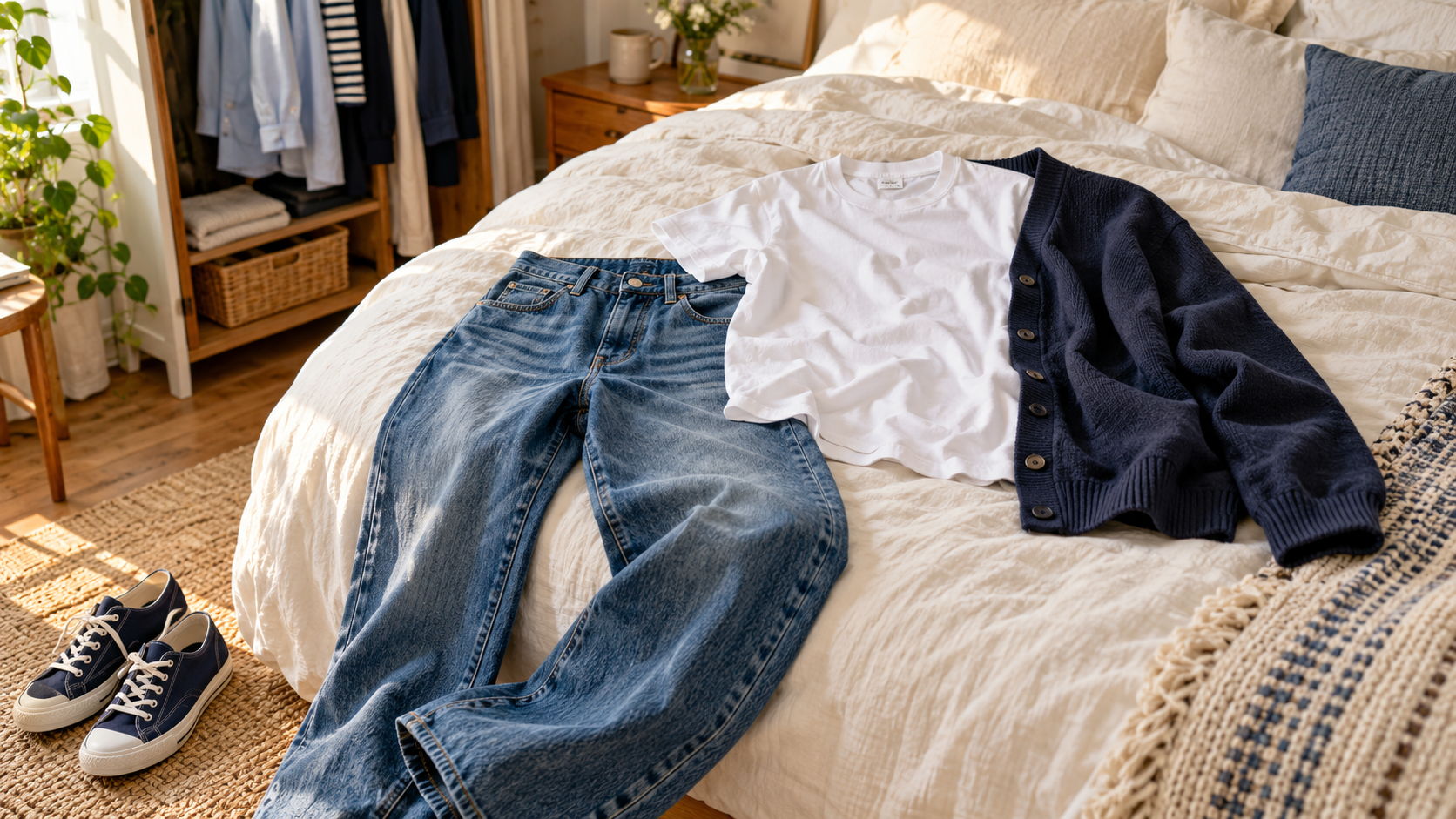
Casual outfit formula 1: Jeans + tee + third piece
Try:
- Jeans
- Tee or tank
- Open button-down, cardigan, denim jacket, or utility jacket
- Sneakers or sandals
- Crossbody bag
Why it works: the third piece makes it feel styled.
Casual outfit formula 2: Lightweight pants + fitted top
Try:
- Linen, cotton, or pull-on trousers
- Fitted tank or tee
- Slides, sneakers, or flats
- Belt if needed
- Woven or leather bag
Why it works: comfortable, but not sloppy.
Casual outfit formula 3: Dress + easy shoe
Try:
- Cotton, knit, or shirt dress
- Sneakers, sandals, or flats
- Denim shirt or cardigan if needed
- Simple bag
Why it works: low effort, high usefulness.
Save three everyday looks that you would happily repeat.
Repeating good outfits is not failure. It is efficiency with taste.
Step 5: Build 2 dinner or social outfits
These are the outfits for dinner, drinks, casual parties, dates, birthdays, or seeing people who might say, “You look nice,” and you would like them to be correct.
Build two outfits that feel slightly elevated but still like you.
Dinner outfit formula 1: Better top + reliable bottom
Try:
- Dark jeans, trousers, or skirt
- Silk, satin, knit, or structured top
- Jewelry
- Flats, sandals, loafers, or low heels
- Smaller bag
Why it works: the better top changes the mood without requiring a full outfit overhaul.
Dinner outfit formula 2: Dress or skirt + grounding layer
Try:
- Midi dress or slip skirt
- Cardigan, blazer, or denim jacket
- Sandals, flats, or boots depending on season
- Jewelry
Why it works: it feels dressed, but not fragile.
Do not build social outfits for a fictional life. If your real dinners are neighborhood restaurants, do not save an outfit that requires valet parking and a lighting designer.
Unless that is your life. In which case, carry on.
Step 6: Build 2 transitional weather outfits
These outfits are for days when the weather cannot commit.
Warm afternoon, cool morning. Hot outside, freezing indoors. Summer clothes, fall feelings. The usual seasonal nonsense.
Your transitional outfits should include light layers.
Transition outfit formula 1: Breathable base + removable layer
Try:
- Tank or tee
- Lightweight trousers, skirt, or jeans
- Button-down shirt, cardigan, or blazer
- Flats, sneakers, or loafers
Why it works: you can adjust without changing the whole outfit.
Transition outfit formula 2: Summer piece + fall-feeling styling
Try:
- Summer dress with denim jacket
- White jeans with darker top
- Linen trousers with lightweight knit
- Shorts with button-down and loafers
- Slip skirt with tee and cardigan
Why it works: the pieces still handle warmth, but the styling feels more seasonal.
Save these outfits with weather notes like:
- Warm day / cold office
- Cool morning / hot afternoon
- Early fall
- Travel day
- AC-proof
Your future self deserves this level of kindness.
Step 7: Build 1 busy-day comfort outfit
This is the outfit for the day when you have too much to do.
Errands, appointments, commuting, travel, school events, walking, sitting, carrying things, possibly regretting agreeing to something. You need comfort, but you do not want to look like you lost a negotiation with your laundry pile.
Try:
- Pull-on trousers + tee + cardigan + sneakers
- Soft jeans + button-down + flats + crossbody bag
- Cotton dress + denim jacket + sneakers
- Wide-leg pants + tank + overshirt + sandals
- Jogger-style trousers + knit top + structured jacket + sneakers
The outfit should pass the busy-day test:
- Can I walk in it?
- Can I sit in it?
- Can I carry a bag in it?
- Can I wear it for hours?
- Does it still look intentional?
If the answer is yes, save it immediately. Busy-day outfits are wardrobe heroes. They do not ask for attention. They simply show up and do the work.
Step 8: Build 1 confidence outfit
Everyone needs a confidence outfit.
This is not necessarily the most stylish outfit. It is the one that makes you feel like yourself quickly. It is the outfit for meetings, unexpected plans, stressful days, social events, or any moment when you need your clothes to stop being another problem.
Your confidence outfit might be:
- Black dress + favorite shoes + simple jewelry
- White jeans + black top + brown belt
- Trousers + fitted knit + loafers
- Dark jeans + blazer + tee
- Midi skirt + button-down + flats
- Monochrome outfit + great earrings
- Favorite dress + denim jacket + sandals
The only rule: it must be reliable.
No tugging. No pinching. No “this works if I stand like this.” No shoes that become a personal betrayal after 40 minutes.
Confidence comes from fit, comfort, familiarity, and the feeling that the outfit is on your side.
Step 9: Try on every outfit
This is the step that separates useful outfit planning from wardrobe fan fiction.
You need to try the outfits on.
Clothes behave differently on the body than they do on a hanger, a bed, or in your imagination. Proportions change. Shoes matter. Layers shift. Necklines fight. Hems betray.
Try on each outfit and check:
- Does it fit comfortably?
- Can I sit down?
- Can I walk?
- Does the shoe work with the hem?
- Does the layer work open and closed?
- Do I need a belt?
- Is anything too sheer?
- Does the outfit match the occasion?
- Do I actually like myself in it?
If something feels off, fix it now.
Swap the shoe. Add a belt. Change the top. Roll the sleeve. Try a different bag. Remove the jacket. Add earrings. Tuck, untuck, half-tuck, or abandon the tuck entirely if it is being difficult.
The outfit is not saved until it works on you.
Step 10: Save each look properly
Once an outfit works, save it somewhere visible and easy to use.
In OpenWardrobe, you can create and save outfits using the actual items in your wardrobe. This makes your outfit bank searchable and reusable, instead of letting good outfits disappear into the fog of “I wore something nice once.”
For each saved look, add helpful notes:
- Occasion: work, dinner, errands, travel
- Season: late summer, fall, winter, spring
- Weather: warm, cold, rainy, AC-proof
- Comfort level: all-day, walking, sitting
- Shoes
- Layer
- Any styling note: tuck shirt, roll sleeves, add belt
- Any issue: needs hem, better bra, different bag
The more complete the note, the easier the outfit is to repeat.
You are not over-documenting. You are rescuing yourself from future closet chaos.
Step 11: Use your outfit bank when you plan the week
An outfit bank becomes powerful when you actually use it.
At the start of the week, look at your calendar and choose outfits from your saved looks.
Ask:
- Which days need polish?
- Which days need comfort?
- Which days involve walking or commuting?
- Which days have dinner plans?
- Which days are hot, cold, rainy, or unpredictable?
- Which outfits have I not worn recently?
- Which pieces need laundry or steaming?
Then plan a few looks in advance.
You do not need to plan every single day if that feels too rigid. Even choosing three outfits ahead of time can make the week easier.
A small plan beats a daily closet argument.
Step 12: Repeat, refine, and rotate
Your outfit bank is not a museum. It should evolve.
After you wear an outfit, ask:
- Did it work all day?
- Was it comfortable?
- Did I feel good in it?
- Did anything annoy me?
- Would I wear it again?
- What would make it better?
Then update the outfit.
Maybe the shoes were wrong. Maybe the cardigan was unnecessary. Maybe the bag was too small. Maybe the outfit looked great but was too warm. Maybe it was perfect and deserves a gold star and immediate repeat status.
Over time, your outfit bank becomes smarter because it is based on real wear, not guesses.
What to include in a good outfit bank
A strong outfit bank should include:
- Outfits for your most common activities
- Different levels of polish
- A mix of pants, skirts, dresses, and jeans if those are part of your style
- Comfortable shoes
- Layering options
- Weather variations
- At least one confidence outfit
- At least one outfit for busy days
- A few outfits that can move from day to evening
It should not include:
- Outfits you only like in theory
- Outfits that are uncomfortable
- Looks that require missing pieces
- Shoes you cannot walk in
- Clothes that do not fit now
- Outfits for a lifestyle you do not actually live
Your outfit bank should be aspirational enough to feel good, but practical enough to wear.
That is the sweet spot.
Outfit bank examples
Here are 12 sample looks you can adapt to your wardrobe.
Look 1: Work trousers outfit
- Cream trousers
- Black tank or tee
- Lightweight blazer
- Loafers
- Structured tote
Best for: work, meetings, polished errands.
Look 2: Button-down and jeans
- Straight-leg jeans
- White button-down
- Brown belt
- Ballet flats or loafers
- Simple jewelry
Best for: casual office, coffee meeting, everyday polish.
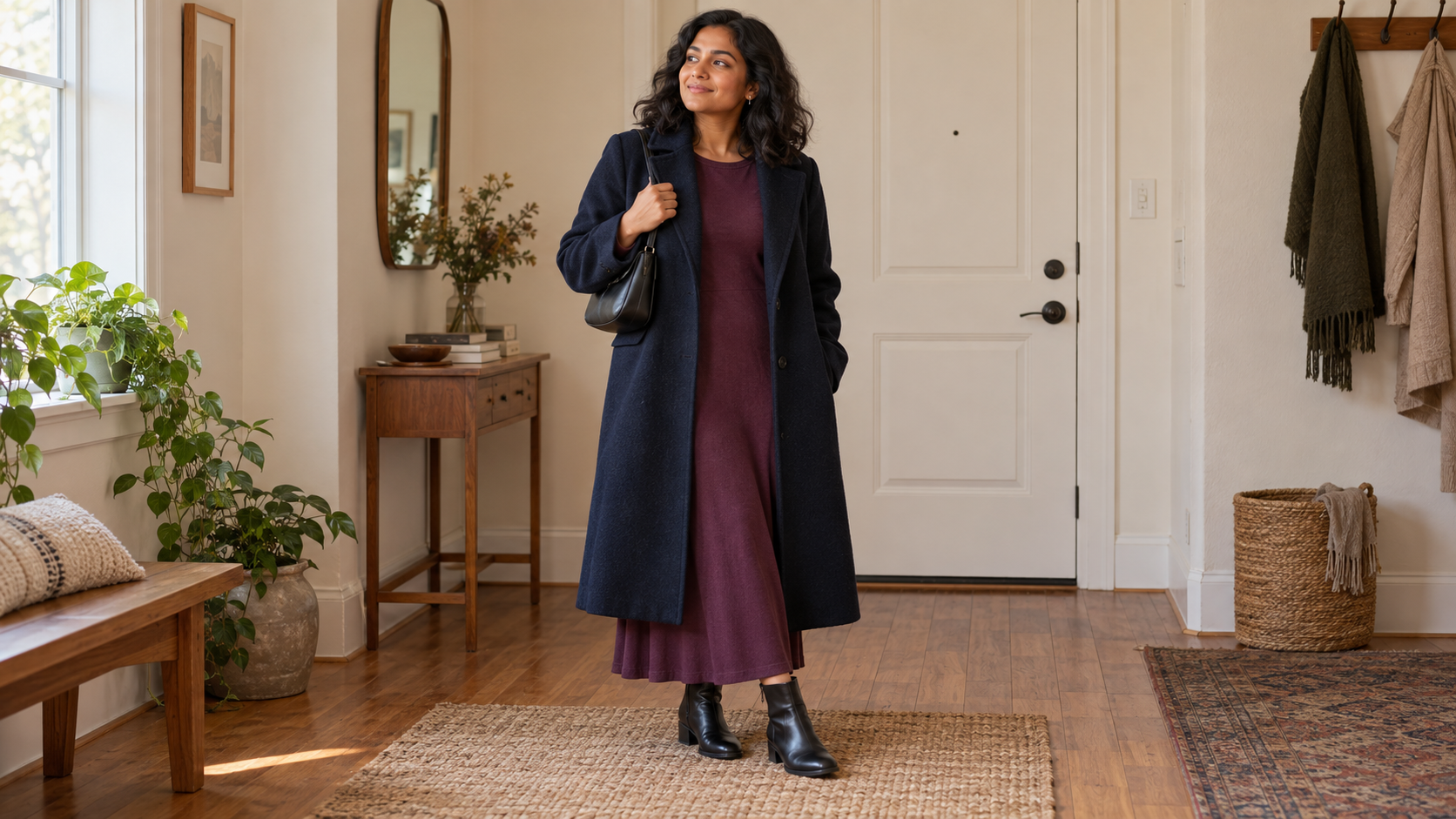
Look 3: Dress with layer
- Midi dress
- Cropped cardigan or blazer
- Flats
- Small bag
Best for: work, dinner, events.
Look 4: Errand outfit
- Jeans
- Tee
- Open button-down
- Sneakers
- Crossbody bag
Best for: errands, appointments, weekend plans.
Look 5: Lightweight pants outfit
- Linen or cotton trousers
- Ribbed tank
- Leather slides or sneakers
- Woven bag
Best for: warm days, casual lunch, travel.
Look 6: Casual dress outfit
- Cotton dress
- Denim jacket or shirt
- Sneakers or sandals
- Tote bag
Best for: busy casual days.
Look 7: Dinner outfit
- Dark jeans
- Better top
- Jewelry
- Flats, sandals, or low heels
- Small bag
Best for: casual dinner, drinks, date night.
Look 8: Skirt outfit
- Midi skirt
- Fitted tee or tank
- Cardigan or blazer
- Flats or sandals
Best for: social plans, work, events.
Look 9: Hot-to-cold outfit
- Sleeveless top
- Wide-leg pants
- Button-down or cardigan
- Closed-toe flats
Best for: warm outside, cold indoors.
Look 10: Early fall outfit
- White jeans
- Navy or olive top
- Denim jacket or lightweight blazer
- Loafers
Best for: transitional weather.
Look 11: Busy-day outfit
- Pull-on trousers
- Soft tee
- Lightweight jacket
- Clean sneakers
- Crossbody bag
Best for: errands, travel, long days.
Look 12: Confidence outfit
- Favorite bottom
- Favorite top
- Best-fitting layer
- Most reliable shoes
- Simple accessories
Best for: any day when you need to feel put together quickly.
Use these as starting points. The best outfit bank is made from your actual clothes, not a generic list floating around the internet acting like everyone owns the same blazer.
How the Outfit Bank Method helps you shop less
An outfit bank makes shopping more intentional because it shows you what you already have.
Once you build 12 looks, you may notice:
- You have more outfits than you thought
- You keep using the same shoes
- You need a belt more than a new dress
- You own plenty of tops but not enough reliable bottoms
- You have great pieces that need styling
- You are missing one connector item
- You keep avoiding certain clothes for a reason
- You buy duplicates in one category but ignore another
This turns shopping from “I need something new” into “I know exactly what would help.”
That is a better starting point.
If five outfits would improve with brown loafers, that may be a real gap. If one outfit would improve with a sparkly feather-trimmed jacket, perhaps let that idea sit quietly for 48 hours and see if it still has anything useful to say.
How to use OpenWardrobe to build your outfit bank
OpenWardrobe is especially useful for this because your outfits are built from your real wardrobe.
Here is how to create your outfit bank:
- Add or review your current wardrobe items.
- Choose your 12 outfit categories.
- Build each look using items you already own.
- Save the outfit with occasion, season, and weather notes.
- Use the calendar to plan when to wear your saved looks.
- Track which outfits you actually wear.
- Review your most-worn outfits to understand your real style.
- Use skipped outfits as clues: wrong fit, wrong shoes, wrong layer, wrong occasion.
- Create a shopping list only after you see repeated gaps.
You can also use your outfit history to repeat what works. There is no prize for inventing a new outfit every morning. Rewearing a good outfit is smart. Rewearing a good outfit with a different shoe or layer is basically wardrobe sorcery.
OpenWardrobe helps you stop treating your closet like a mystery box and start treating it like a system.
A much cuter system than a spreadsheet, thankfully.
FAQ: The Outfit Bank Method
What is an outfit bank?
An outfit bank is a saved collection of complete outfits you can use when getting dressed. It helps you save time, reduce decision fatigue, and make better use of clothes you already own.
How many outfits should I save?
Start with 12 outfits. That gives you enough variety for work, casual days, dinners, transitional weather, busy days, and confidence moments without becoming overwhelming.
Is an outfit bank the same as a capsule wardrobe?
No. A capsule wardrobe is a limited set of clothes designed to mix and match. An outfit bank is a saved set of complete looks. You can build an outfit bank from a capsule wardrobe, but you do not need a capsule to use this method.
How do I build outfits from clothes I already own?
Start with your most-worn pieces, then create complete looks with tops, bottoms, layers, shoes, bags, and accessories. Try each outfit on, adjust anything that feels off, and save the final look.
How can I get dressed faster in the morning?
Save complete outfits in advance. When your outfits are already tested and saved, you can choose one based on your calendar and weather instead of starting from scratch.
What outfits should I save first?
Save outfits for your most common routine: work, errands, dinners, transitional weather, busy days, and one confidence outfit. Prioritize outfits you will actually wear often.
Can I repeat outfits?
Yes. Repeating outfits is practical, stylish, and normal. You can also repeat formulas while changing one element, such as shoes, jewelry, a layer, or a bag.
What if I still feel like I have nothing to wear?
Look for the pattern. Are you missing shoes, layers, reliable bottoms, better basics, or outfit ideas? An outfit bank helps identify whether you need new clothes or simply better combinations.
Final thought: make getting dressed easier before life gets busier
You do not need to reinvent your style every morning.
You need a few outfits that already work.
The Outfit Bank Method gives you a practical shortcut: save 12 complete looks now so getting dressed is easier later. Build them from clothes you already own. Try them on. Save them properly. Use them when your week gets busy, your brain is full, or your closet starts pretending it has never met you before.
Your clothes may already have more outfit potential than you think.
They just need to be organized into looks your future self can actually find.