You said yes to Halloween plans. You know where you’re going, who you’re going with, and possibly what snacks you’re bringing. Your costume is currently “person who owns a coat.”
We can work with that.
A Halloween costume from clothes you already own starts with a familiar outfit and one detail that tells people who you’re supposed to be. A notebook full of case notes. A sketch in progress. A race number for a sporting event you have absolutely no intention of running.
You get to dress up, have fun, and keep wearing the clothes afterward. Your trench does not need to spend the next eleven months in a bag marked HALLOWEEN.
Start with an outfit you’d happily wear all evening
Look for a piece with a little personality: a trench, a blazer, a roomy shirt, a striped top, a track jacket. Put it with bottoms and shoes you already like wearing. A couple of combinations are plenty; the rest of the closet can sit this one out.
Now look at the outfit and see what it suggests. Tailoring might give you a detective. An overshirt and jeans could become an artist. Sportswear puts you halfway to an athlete before you’ve done anything remotely athletic.
The useful question is: what one detail would help someone recognize the idea? You can use something you own, make it from materials on hand, or borrow it with the owner’s okay. A notebook on its own could belong to anyone. Open it to a page headed “CASE NOTES,” and suddenly we have an investigation.
If you find it easier to picture whole looks, How to Organize Your Wardrobe by Outfit (Not by Category) can help. For Halloween, start with just one combination. These three ideas give you somewhere to take it.
The detective with a very important case
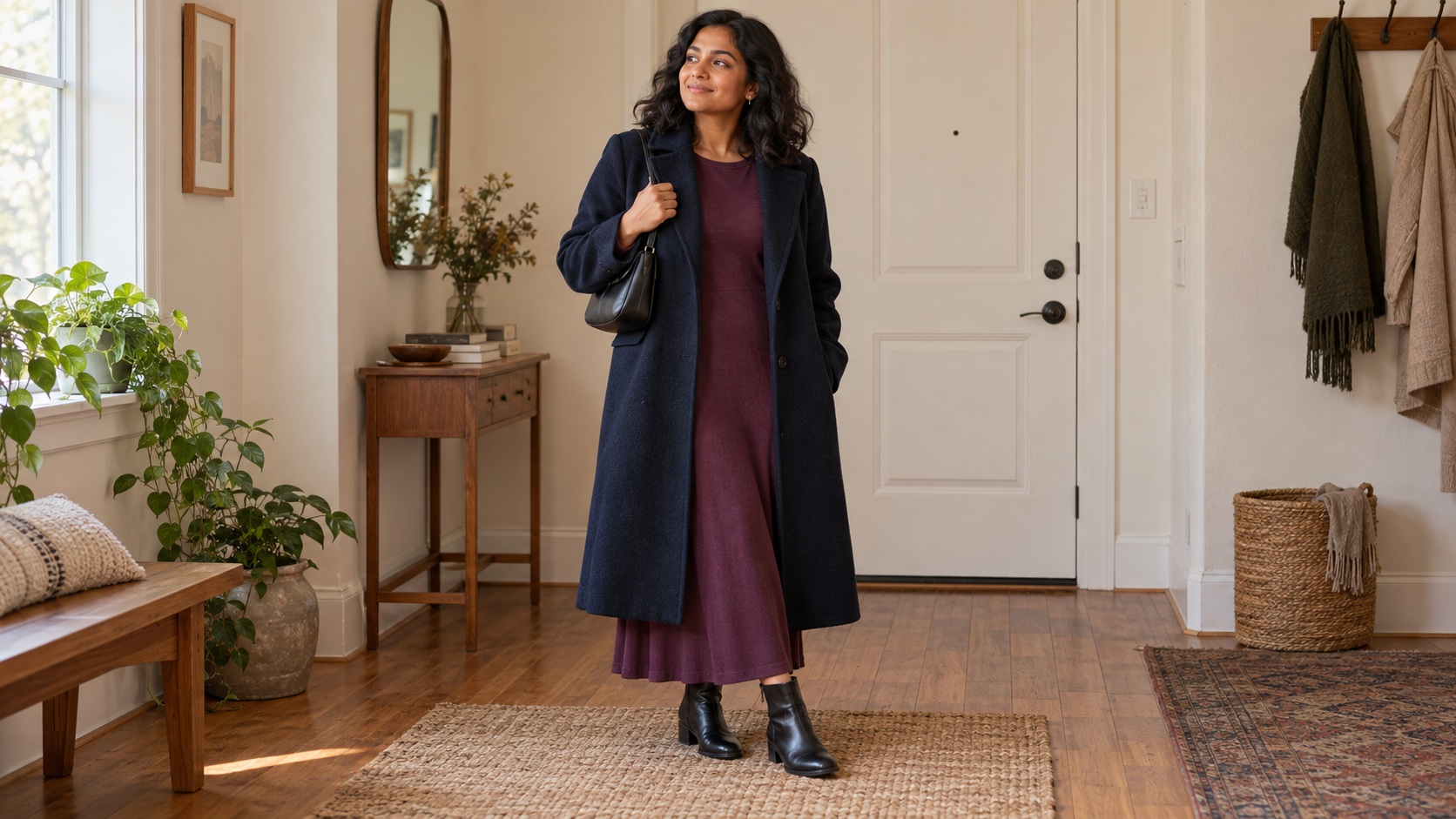
Imagine a tan trench over a cream shirt, charcoal trousers, and black loafers. Add a notebook and pencil, then write “CASE NOTES” across a page. Your assignment: the mysterious disappearance of the last slice of cake.
Finally, investigative work you can really get behind.
The notebook and a quick “I’m investigating the missing cake” do most of the explaining. The coat adds atmosphere. You can enjoy the character without recreating a famous detective’s outfit down to the correct pocket square.
No trench? Try a blazer, cardigan, or the jacket you’ll actually need outside. Jeans and a T-shirt work underneath, as does a dress you already wear with that layer. Keep the case notes and the introduction. You’re changing the clothes, not abandoning the mystery.
On Monday: the cream shirt, trousers, loafers, and trench go straight back to whatever you normally wear them for. Leave the coat off if it’s warm. Put the case notebook away, unless the cake situation remains unresolved.
The artist whose subject is the snack table
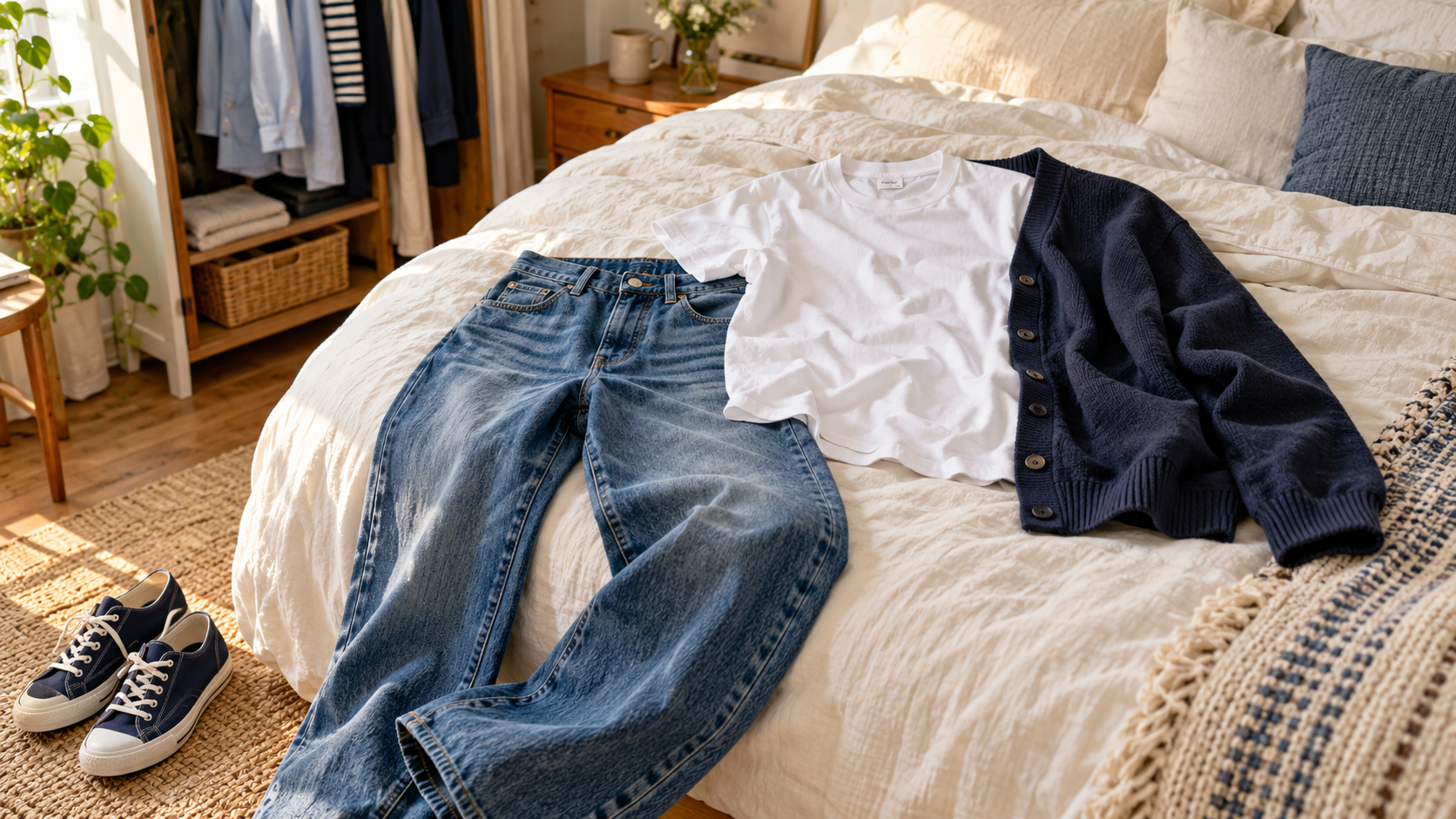
A blue overshirt, white T-shirt, jeans, and sneakers make an easy starting point. Bring a sketchbook and pencil, or tuck a few sheets of paper into a notebook you already have. Start a small drawing and keep it visible when you introduce the costume.
The snack bowl is an excellent subject. It stays reasonably still, and you have a compelling reason to stand near it.
Your sketch gives the outfit its meaning. If drawing in front of people sounds fun, add a little more when someone asks about your costume. If it doesn’t, the page can speak for itself. There’s no need to paint-splatter a perfectly good shirt for one night.
An everyday dress, a cardigan with trousers, or a plain shirt over a tank can work just as well as the overshirt combination. An apron you already use for creative projects is another option. Keep the focus on something you’re making; a particular hat, accent, or nationality doesn’t need to enter into it.
On Monday: wear the overshirt, tee, jeans, and sneakers exactly as they are. Take the sketchbook if you feel like drawing. This is the rare Halloween plan that might leave you with a new hobby and no laundry emergency.
The athlete with a beautifully short race schedule
Pull out a track jacket, T-shirt, track trousers, and sneakers. Color blocking or stripes can give them a retro feel. Write a large number on scrap card, and you have the beginnings of a fictional race-day outfit.
If your jacket has a suitable pocket, tuck the card into the opening with the number showing and check that it stays put. Otherwise, carry it for your entrance or a photo, then put it away. Skip glue, paint, and untested adhesives on clothes you want to wear again.
A sweatshirt or zip hoodie with leggings, shorts, or joggers works, too. Let your evening’s weather choose the layers. If the outfit looks more current than retro, you’re a present-day fun-run contestant. No committee needs to approve the decade.
On Monday: remove the number and wear the same pieces for a walk, errands, or wherever sportswear fits your day. Your training program is entirely your own business.
Give the costume a quick rehearsal
Try on the complete outfit with the shoes, bag, and weather layers you’ll use. Show someone the costume before you name it. If they’re baffled, make the identifying detail clearer or try a short introduction. “Detective investigating missing cake” gets further than buying another beige garment.
Then check what happens when the evening actually starts. Will your jacket cover the race number? Can you take the trench off indoors and still introduce your detective? Can you sit, reach, and move comfortably? If a prop occupies a hand you need for your bag or anything else you use, find somewhere to stow it. Artists are allowed to put their sketchbooks down and eat.
Check the invitation or venue’s costume and prop rules, too. Choose details you can put away easily when it’s time to eat or dance.
Finally, remove the costume cue and look at the clothes again. Where would you wear this outfit next? Work, lunch, errands, a walk: “Monday” means your ordinary life. If one piece still feels like fancy dress, swap it for something you genuinely reach for, then try the character again.
Save both versions while they’re right in front of you
Lay out the Halloween look and its everyday version, or take a photo of each. Seeing the same clothes twice makes the rewear plan wonderfully obvious.
You can create and save outfits in OpenWardrobe with the clothes in your digital wardrobe. Save the Halloween clothing combination and, if you change any garments, its everyday version. Keep the prop idea in a photo or your usual notes.
Now you have a costume, an outfit for another day, and a very reasonable excuse to investigate the cake. Enjoy the party.